
There are cycling routes you remember because of the roads, the climbs or the landscapes.
The Camino de Santiago is different.
You remember the places you passed through, the people you met along the way, the changing landscapes and the strange sense of momentum that develops as hundreds of kilometres gradually become fifty, twenty and finally the streets of Santiago de Compostela.
For centuries, pilgrims have travelled towards Santiago from across Europe. Today, the network of Camino routes extends across Spain, Portugal and beyond, but the French Way – the Camino Francés – remains the most iconic route of them all.
And it makes for an extraordinary journey by bike.
Cycling allows you to experience the Camino on a different scale. You can cross entire landscapes in a single day, moving from the open plains of Castilla y León into the mountains around the Bierzo and O Cebreiro, before descending into the green countryside of Galicia.
But cycling the Camino isn’t as simple as downloading a walking track and following the yellow arrows.
Some sections of the pilgrim trail are fantastic to ride. Others are rocky, steep, crowded or simply more enjoyable when replaced with a nearby secondary road. The right bike matters, the stages matter and knowing when to follow the traditional Camino – and when not to -can completely change the experience.
We’ve been operating cycling journeys on the Camino for years, including our French Way bike tour from León to Santiago, and in this guide we’ll share what we’ve learned: where to start, which sections are best for cycling, what bike to choose, how difficult the route really is and what to expect as you approach Santiago.
Whether you’re interested in the challenge, the history, the landscapes or simply the idea of travelling across northern Spain under your own power, the Camino is much more than another point-to-point bike tour.
The destination is Santiago. But the reason to ride it is everything that happens along the way.
To understand why cycling the Camino feels different from another long-distance bike journey, it helps to understand what the Camino actually represents.
The Camino de Santiago isn’t a single trail. It’s an enormous network of pilgrimage routes that developed across Europe, all leading towards Santiago de Compostela, where a tomb believed to contain the remains of the Apostle Saint James was discovered in the 9th century.
Santiago subsequently became one of the great pilgrimage destinations of medieval Christianity, alongside Rome and Jerusalem. Pilgrims travelled towards Galicia from across Europe, creating routes that crossed mountains, kingdoms, languages and cultures.
But the importance of the Camino extends well beyond religion.
As pilgrims moved across Europe, the routes became corridors for the exchange of ideas, architecture, art, commerce and culture. Towns developed around the needs of pilgrims. Bridges were built, monasteries and hospitals provided shelter, and churches and cathedrals appeared along the way.
UNESCO describes the Camino as having played a crucial role in cultural exchange between the Iberian Peninsula and the rest of Europe, particularly during the Middle Ages. It also contributed to the growth of cities across northern Spain and left an extraordinary architectural legacy ranging from Romanesque to Gothic, Renaissance and Baroque art.
That heritage is still visible when you travel the Camino today. You’re not simply cycling between a series of historic monuments. The road connecting them is itself part of the history.
There are many Caminos to Santiago, but none has had quite the historical influence of the Camino Francés – the French Way.
Some of the earliest pilgrimage routes followed northern Spain, but from the 11th century onwards the French Way became the principal route across the Iberian Peninsula. Its comparatively easier passage across northern Spain eventually surpassed the older northern routes and established the corridor that most people today associate with the Camino de Santiago.
Pilgrims arriving from different parts of Europe crossed France and the Pyrenees before converging onto the route through northern Spain.
From there, the Camino passed through places that remain among northern Spain’s great historic destinations:
Pamplona. Logroño. Burgos. León. Astorga. Ponferrada. O Cebreiro. Santiago de Compostela.
The Camino didn’t simply pass through these places. In many cases, it helped shape them.
Churches, monasteries, bridges, hospitals and hostels were constructed to serve the people making their way towards Santiago. The historic French Way crosses five Spanish autonomous communities and 166 towns and villages, with an extraordinary concentration of historic buildings associated with the pilgrimage.
You experience this constantly from the bicycle.
In León, the Camino passes through one of northern Spain’s great historic cities and its magnificent Gothic cathedral.
In Astorga, Camino history meets the city’s Roman past and Gaudí’s extraordinary Episcopal Palace.
Further west, Ponferrada‘s Templar castle recalls the military orders associated with protecting pilgrims travelling towards Santiago.
At Cruz de Ferro, pilgrims still leave stones beneath a simple iron cross in one of the French Way’s most symbolic traditions.
And at O Cebreiro, the route enters Galicia through a mountain settlement whose identity has been intertwined with the pilgrimage for centuries.
These aren’t attractions that have been assembled around a modern cycling route.
The cycling route exists because the Camino was here first.
The Camino has changed enormously since medieval pilgrims crossed northern Spain.
Today you’ll meet people travelling for religious reasons, but also cyclists and walkers motivated by culture, adventure, personal reflection, sport or simply curiosity.
That mixture is part of what keeps the Camino alive.
It isn’t a preserved historical route that you observe from a distance.
It’s still being travelled.
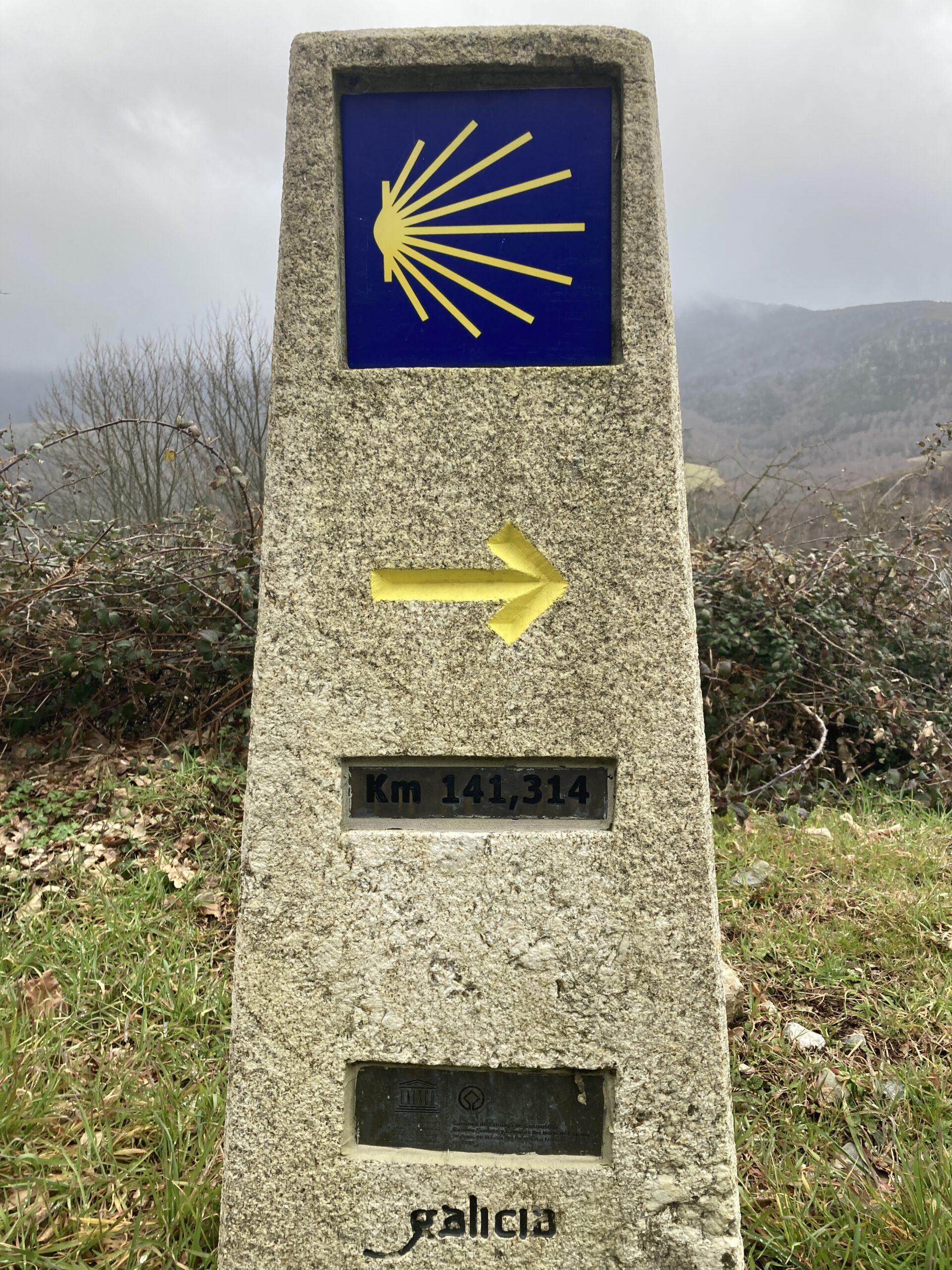
You’ll share cafés with walkers carrying everything they need on their backs. You’ll pass cyclists from around the world. You’ll see scallop shells attached to backpacks and bicycles and yellow arrows painted onto walls, roads and stones, repeatedly pointing everyone towards the same destination.
Eventually, all those individual journeys begin converging on Santiago.
That’s what separates the Camino from most long-distance cycling routes.
You’re not only travelling through a landscape.
You’re joining a journey that people have been making for more than a thousand years.
There isn’t only one Camino to Santiago.
Routes approach the city from across Spain, Portugal and the rest of Europe, and each creates a very different cycling experience.
Some are much more straightforward to adapt to bicycles than others, and the right choice depends on whether you’re looking for history, coastal landscapes, challenging terrain, quieter trails or the classic Camino atmosphere.
If this is your first Camino and you want the route most closely associated with the history and culture of the pilgrimage, we’d choose the French Way.
It’s the classic Camino: an extraordinary journey across northern Spain connecting historic cities, tiny villages, vineyards, open plains and mountain landscapes before eventually reaching Galicia.
The complete route is a substantial undertaking, but that’s another advantage of the Camino: you don’t have to ride all of it.
Unlike a conventional point-to-point cycling route with a clearly defined starting line, the Camino has always been about people beginning their journey from different places and gradually converging towards Santiago.
For cyclists, that gives you considerable freedom to choose a starting point according to the time you have available.
For the classic end-to-end experience, the most famous starting point is Saint-Jean-Pied-de-Port, on the French side of the Pyrenees. From here, the journey begins immediately with one of its greatest physical barriers: crossing the Pyrenees towards Roncesvalles.
After that come Pamplona and Navarra, the vineyards of La Rioja, Burgos, the vast landscapes of the Meseta, León, the mountains of El Bierzo and finally Galicia.
This is the French Way as a true crossing of northern Spain.
At a recreational pace of around 50 km per day, Spain’s official tourism portal suggests allowing roughly two weeks to cycle the French Way. It’s a major journey, but for cyclists with the time, few routes in Europe offer such extraordinary cultural and geographical variety.
Starting in Pamplona removes the initial Pyrenean crossing but still leaves you with a substantial journey towards Santiago.
From here, the Camino crosses Navarra before entering La Rioja, creating a wonderful combination of cycling, historic towns, vineyards and food. You then continue towards Burgos and the landscapes of Castilla y León.
For cyclists interested in experiencing a large part of northern Spain without committing to the complete route from France, Pamplona makes a very attractive starting point.
Burgos offers another logical starting point. Its magnificent Gothic cathedral immediately establishes the historical importance of the Camino, while the route west leads onto one of the French Way’s most distinctive landscapes: the Meseta.
The terrain opens dramatically. Huge skies, fields of grain, tiny villages and long horizons replace the greener landscapes further east. Some cyclists love this part of the French Way for its enormous sense of space. Others find it repetitive. But that’s part of the Camino too.
Not every kilometre needs to provide a spectacular viewpoint. Sometimes the experience is simply about moving west, day after day, towards Santiago.
For a cycling journey of around a week, León is where we think the French Way becomes particularly interesting. You begin in one of Spain’s great historic cities and almost immediately encounter an extraordinary succession of landscapes and Camino landmarks.
From León, the route takes you towards Astorga and the Maragatería, before climbing into the mountains towards Cruz de Ferro.
Then comes the descent into El Bierzo, Ponferrada and Villafranca del Bierzo, followed by the defining climb towards O Cebreiro and Galicia. From there, the landscapes become greener and the number of pilgrims gradually increases as different routes and starting points converge towards Santiago.
It gives you enough distance for the journey to develop a genuine rhythm without requiring two weeks or more away.
That’s why our French Way bike tour from León to Santiago starts here.
It also comfortably exceeds the minimum distance required for cyclists seeking the Compostela. Cyclists must complete at least 200 km of the Camino to qualify, subject to the Pilgrim’s Office requirements.
The French Way isn’t the only great way to cross northern Spain towards Santiago. The Camino del Norte – Northern Way – follows Spain’s northern coastline through the Basque Country, Cantabria and Asturias before eventually continuing towards Galicia.
And for cyclists, it creates some fascinating alternative starting points.
Rather than beginning in the Pyrenees around Saint-Jean-Pied-de-Port, you can begin closer to the Atlantic.
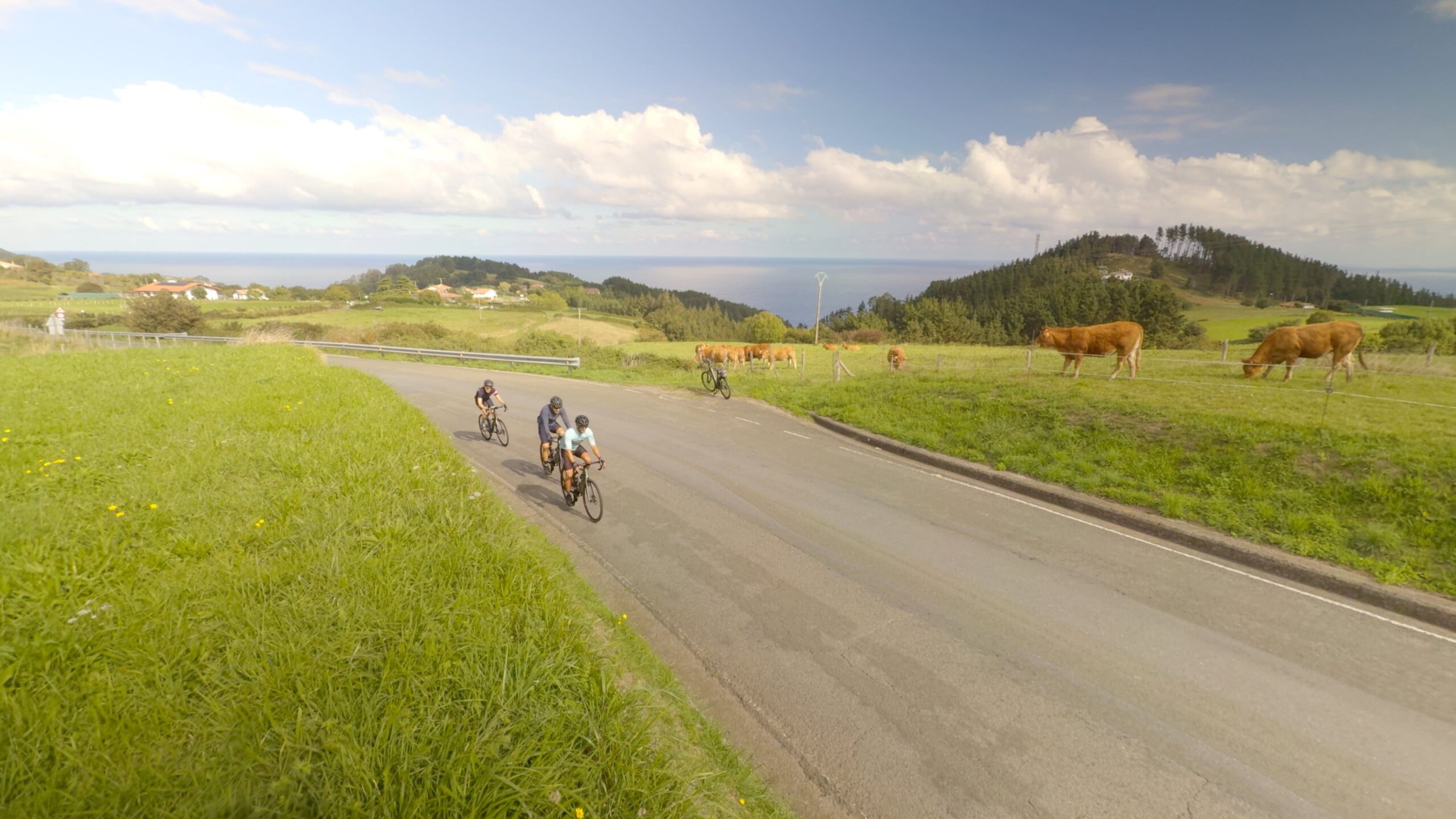
The Spanish Northern Way begins around Irún, beside the French border. But on a bicycle, there’s no particular reason your journey has to begin precisely where an official route marker tells you to start. Beginning in Saint-Jean-de-Luz, on the French Basque coast, allows you to ride towards Hendaye, cross the border into Irún and then continue west into Spain.
Alternatively, San Sebastián makes a fantastic starting point. The city is also one of the best bases for cycling tours in the Basque Country, with spectacular coastal roads and challenging riding through the green hills surrounding the city.
You begin your Camino in one of Europe’s great food cities before riding west through the spectacular coastal landscapes of the Basque Country. San Sebastián gives way to places such as Zarautz, Getaria, Zumaia and Deba, with the route repeatedly moving between green hills and views over the Cantabrian Sea.
But don’t mistake coastal scenery for easy cycling. The Basque Country is relentlessly rolling, and sections of the traditional walking Camino are considerably better suited to hiking than cycling. This is particularly important on the Northern Way. A good cycling route needs to make intelligent use of nearby roads and alternative tracks rather than blindly following every yellow arrow.
For experienced cyclists, however, a journey beginning around Saint-Jean-de-Luz or San Sebastián and travelling west along northern Spain could be extraordinary.
If you’re considering spending a few days exploring the region before beginning the Camino, read our complete guide to cycling in the Basque Country for our favourite roads, climbs and places to ride.
A bike tour in the Portuguese Camino de Santiago offers a completely different journey.
Rather than crossing northern Spain from east to west, you travel north from Portugal towards Galicia and Santiago.
For cyclists, there are two particularly interesting options: the Central Portuguese Way, travelling through historic towns and the interior, and the Coastal Portuguese Way, following the Atlantic through northern Portugal before entering Galicia.
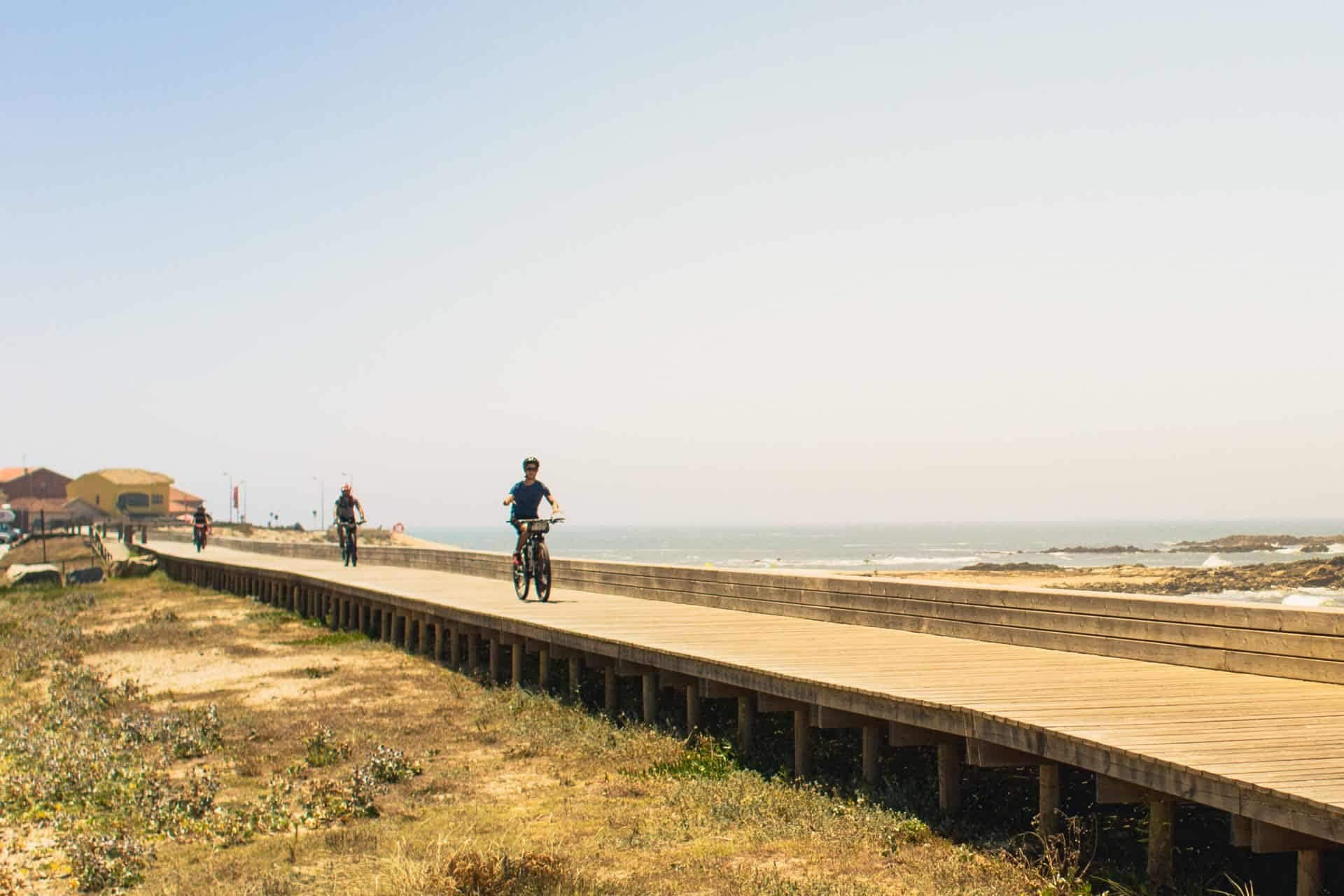
The Coastal route generally offers gentler terrain during its Portuguese stages and spectacular Atlantic scenery, while the Central route is more historic and can become considerably more demanding in places.
We’ve explored both extensively on our Portugal cycling holidays website.
If you’re considering approaching Santiago from Portugal, our guides to cycling the Central Portuguese Camino and cycling the Coastal Portuguese Camino goes into much greater detail about the different routes, terrain and bike choices.
Best for: Portuguese culture, Atlantic scenery and an alternative approach to Santiago
Terrain: Mixed and highly dependent on Central vs Coastal
Best bike: Gravel, mountain bike or e-bike
Character: Historic, Atlantic and increasingly popular
The Camino Primitivo is closely connected to the earliest history of the pilgrimage. In fact, the Northern Routes predate the French Way and developed in connection with the original discovery and promotion of the tomb of Saint James by the Kingdom of Asturias.
For cyclists, however, historical importance doesn’t necessarily mean easy riding. The Primitivo crosses mountainous terrain between Asturias and Galicia, with steeper gradients and rougher sections than you’ll encounter on much of the French Way.
For experienced mountain bikers looking for a challenging Camino, it can be extraordinary. For recreational cyclists planning their first Camino, it wouldn’t normally be our first recommendation.
Best for: Experienced and adventurous cyclists
Terrain: Mountainous, steep and potentially technical
Best bike: Mountain bike or capable e-MTB
Character: Remote, historic and challenging
For many cyclists planning their first Camino, this is probably the most useful comparison.
Choose the French Way if you want the classic Camino experience: centuries of pilgrimage history, famous landmarks, established infrastructure and the unmistakable social atmosphere created by thousands of people travelling along the same historic corridor towards Santiago.
Choose the Portuguese Way if you want to combine the Camino with Portugal, experience Atlantic landscapes or follow a route that can feel somewhat quieter and more intimate before the different Camino routes begin converging in Galicia.
The riding is different too. The French Way from León includes some significant mountain terrain around Cruz de Ferro and O Cebreiro, while the Portuguese Coastal Way generally provides a gentler introduction to a Camino journey. The Portuguese Central route can be considerably tougher than its proximity to the coast might suggest.
We operate cycling journeys on both sides of the border, and we don’t think one is inherently better. They’re simply very different ways of arriving at the same place. And perhaps that’s the most Camino-like answer possible.
See what it’s like to experience the Portuguese Camino de Santiago below:
The Camino isn’t a conventional cycling destination. You don’t come here for perfectly surfaced roads, famous switchbacks or uninterrupted singletrack. You come because the bicycle allows you to travel through one of Europe’s great cultural landscapes.
Leaving León, the open landscapes of Castilla stretch towards the horizon. Astorga introduces the architecture and history of the Maragatería. Beyond it, the road begins climbing towards the mountains and the Cruz de Ferro, one of the most symbolic places on the French Way.
Then the landscape changes again. You descend into El Bierzo, passing through villages, vineyards and Ponferrada with its extraordinary Templar castle, before approaching one of the defining challenges of this part of the Camino: the climb towards O Cebreiro and Galicia.
From there, the Camino becomes greener, more intimate and increasingly populated by pilgrims as every route begins converging towards Santiago. That’s one of the things that makes cycling here special.
The French Way crosses regions with very different landscapes, architecture, food and traditions.
The Castilla y León you leave behind around León and Astorga feels very different from El Bierzo. Cross into Galicia and everything changes again: the vegetation, villages, weather, language and food.
A bicycle is fast enough to make those transitions obvious but slow enough for you to actually experience them.
The social atmosphere of the Camino is difficult to reproduce on a normal cycling holiday.
You’ll repeatedly pass walkers you’ve seen earlier in the journey, meet cyclists from different countries and share cafés, village squares and restaurants with people travelling towards the same destination for completely different reasons. Some are religious pilgrims, some are looking for a personal challenge, some are taking time away from ordinary life, and some simply want to cross northern Spain and arrive in Santiago by bicycle.
You don’t need to approach the Camino as a religious pilgrimage to feel that there’s something different about travelling on a route that people have followed for centuries.
Walking the French Way is normally a journey measured in weeks. A bicycle changes the scale.
Stages of roughly 50–60 km allow you to connect historic towns, mountain landscapes and rural villages while still leaving time to stop along the way. That’s approximately the rhythm we use on our French Way bike tour from León to Santiago, which completes the journey over eight days and seven nights.
But the objective shouldn’t be to cover as much ground as possible. One of the easiest mistakes to make when cycling the Camino is treating it as a race to Santiago. The cafés, churches, villages, conversations and unexpected stops are part of the route.
Give yourself time for them.
There are more spectacular individual climbs in Spain. In Mallorca you’ll find smoother roads, more technical trails and there are other cycling destinations in Spain with better weather. But very few rides have an arrival quite like Santiago de Compostela.
The final kilometres gradually bring more pilgrims together until you enter the historic city and eventually reach the Praza do Obradoiro, facing the Cathedral of Santiago.
By then, the bicycle you’ve been riding for hundreds of kilometres feels less like sporting equipment and more like the thing that brought you there. And that’s probably the best explanation for why we keep coming back to the Camino.
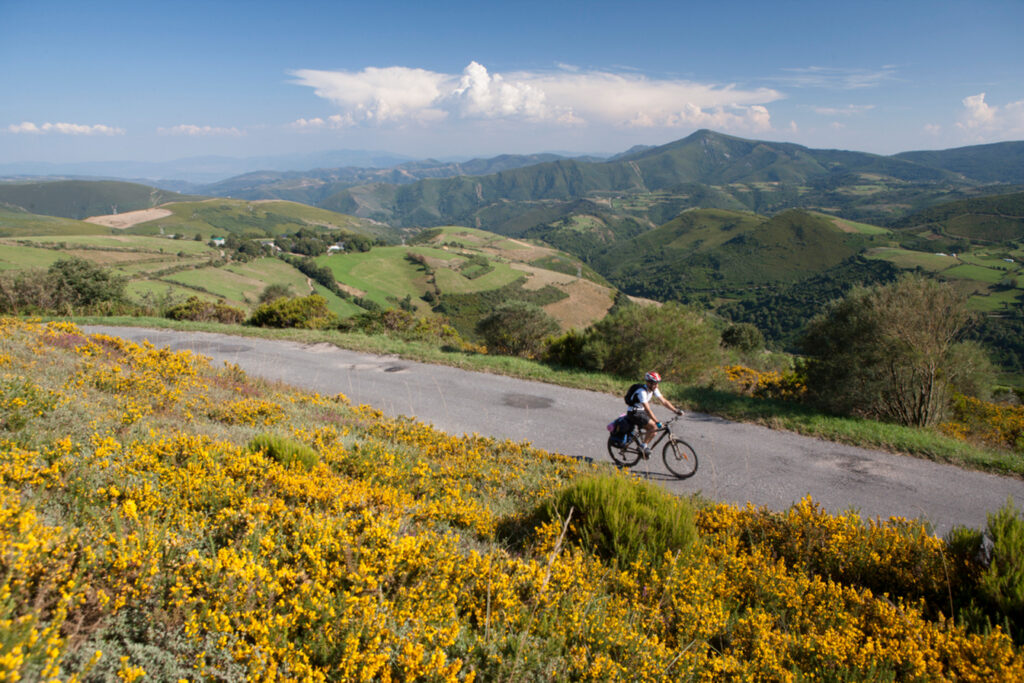
For cyclists with around a week available, León to Santiago is our favourite section of the French Way.
It’s long enough to feel like a genuine journey, comfortably exceeds the 200 km required for cyclists seeking the Compostela, and includes some of the most memorable landscapes and landmarks of the Camino.
More importantly, the route never stays the same for very long. You leave the relatively open landscapes around León, cross the Maragatería towards Astorga, climb into the mountains at Cruz de Ferro, descend into the vineyards of El Bierzo, tackle the climb towards O Cebreiro and finally enter the green hills and forests of Galicia.
Over the course of the journey, you experience several completely different landscapes, and that’s one of the reasons we think León works so well as a starting point.
León is much more than a convenient place to collect your bike.
The city has been one of the major stops on the French Way for centuries, and we’d always recommend arriving with enough time to explore before beginning the journey.
The obvious landmark is the magnificent Cathedral of León, but the historic centre deserves wandering too. The Camino runs directly through the heart of the city, reinforcing something you’ll notice repeatedly on the French Way: many of the places you’re visiting developed in close relationship with the pilgrimage itself. UNESCO’s documentation of the French Way identifies an extraordinary concentration of religious buildings, pilgrim infrastructure, bridges and other historic structures along the route.
This is also a good place to prepare the bike, organise your Credencial del Peregrino and settle into the rhythm of the Camino.
And don’t rush dinner. León is a fantastic food city, and the bars of the Barrio Húmedo and Barrio Romántico make a considerably better introduction to the Camino than sitting in your hotel thinking about tomorrow’s kilometres.
Insider tip from our Live Love Ride guides: Arrive in León at least one day before you start riding. Get the bike fitting done, organise your Credencial and explore the city without cycling clothes on. That way, the following morning actually feels like the beginning of a journey: breakfast, bike, and west towards Santiago.
The first kilometres gradually take you away from León and into the open landscapes of Castilla y León. They’re also your first introduction to one of the most important lessons about cycling the Camino rather than walking it: you don’t need to follow every meter of the walking trail.
Some sections of the traditional Camino are wonderful to ride. Others are rocky, narrow, unnecessarily slow or simply less enjoyable than a quiet road running almost parallel to them.
Our approach is to preserve the character and landmarks of the Camino while adapting the route intelligently for bicycles.
One of the highlights of this first part of the journey is Hospital de Órbigo, where the Camino crosses the extraordinary medieval bridge over the Órbigo River.
It’s exactly the kind of place where cycling the Camino works so well. You arrive under your own power, get off the bicycle, walk across the cobbles and stop for a coffee before continuing west.
Eventually, you reach Astorga, another of the great historic crossroads of the Camino. The city combines Roman origins with its cathedral, medieval Camino heritage and Gaudí’s remarkable Episcopal Palace.
Don’t simply arrive, shower and leave the following morning. Astorga deserves some time.
Insider tip from our Live Love Ride guides: Don’t judge the Camino by the first kilometres out of León – the riding gets much better once you’ve left the urban areas behind. Make Hospital de Órbigo your proper stop of the day. And take the bridge slowly: centuries-old cobbles weren’t designed with bicycle tyres in mind.
Leaving Astorga, the character of the Camino begins to change considerably. You enter the Maragatería, a distinctive region of small stone villages and increasingly mountainous landscapes. One of the places worth including is Castrillo de los Polvazares, a beautifully preserved Maragato village of stone houses and cobbled streets.
This is also the home of one of the region’s most famous dishes: cocido maragato.
And it comes with an unusual tradition. Unlike most Spanish cocidos, it’s traditionally served in reverse order: first the meats, then the chickpeas and vegetables, and finally the soup. It’s fantastic. But not necessarily what we’d recommend immediately before attacking the biggest climb of your cycling holiday.
This is where knowing the itinerary helps.
Insider tip from our Live Love Ride guides: Visit Castrillo de los Polvazares even if you don’t stop for a full cocido. And if you do want the complete cocido maragato experience, we’d rather eat it when you have time to enjoy it than squeeze an enormous lunch into the middle of a demanding riding day. The Camino is a gastronomic journey too, but timing matters on a bicycle.
Beyond the villages of the Maragatería, the terrain continues rising towards the Montes de León. Eventually, you reach one of the most symbolic places on the entire French Way: Cruz de Ferro.
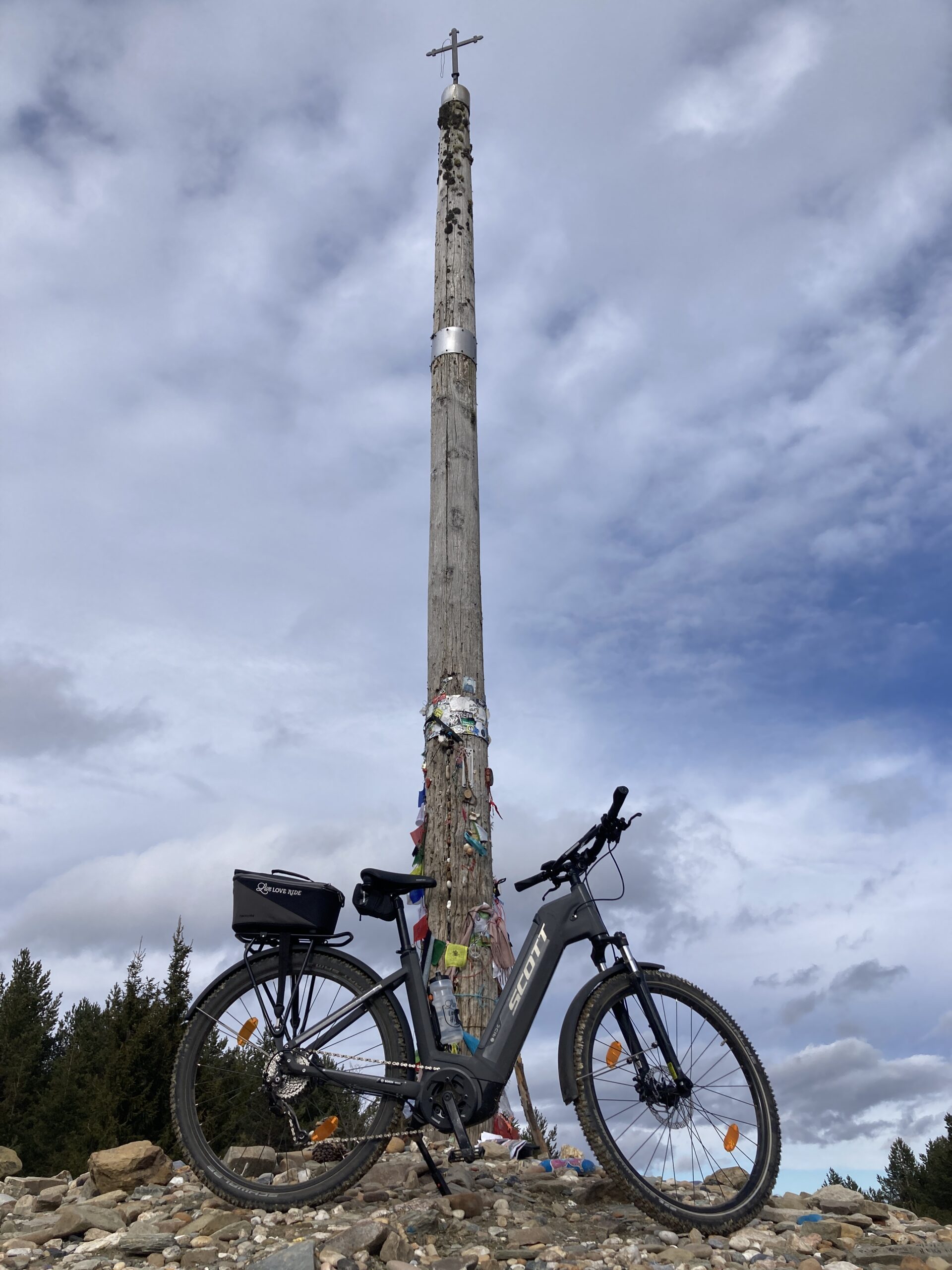
The monument itself is remarkably simple. A small iron cross stands at the top of a tall wooden pole, surrounded by an enormous mound of stones left by pilgrims. Traditionally, pilgrims bring a stone from home and leave it at Cruz de Ferro, symbolically leaving something behind before continuing their journey towards Santiago.
You don’t have to attach any religious significance to the tradition. But after climbing there by bicycle, it’s difficult not to feel that you’ve reached an important point in the journey. You’re high in the mountains, Astorga is behind you, and the landscapes of El Bierzo lie ahead.
Insider tip from our Live Love Ride guides: If you want to participate in the tradition at Cruz de Ferro, bring a small stone from home rather than picking one up five minutes before you arrive. It makes the moment more personal. And don’t arrive, take a photograph and immediately disappear – put the bike down and spend a few minutes there.
What follows Cruz de Ferro is one of the places where being on a bicycle changes the Camino significantly.
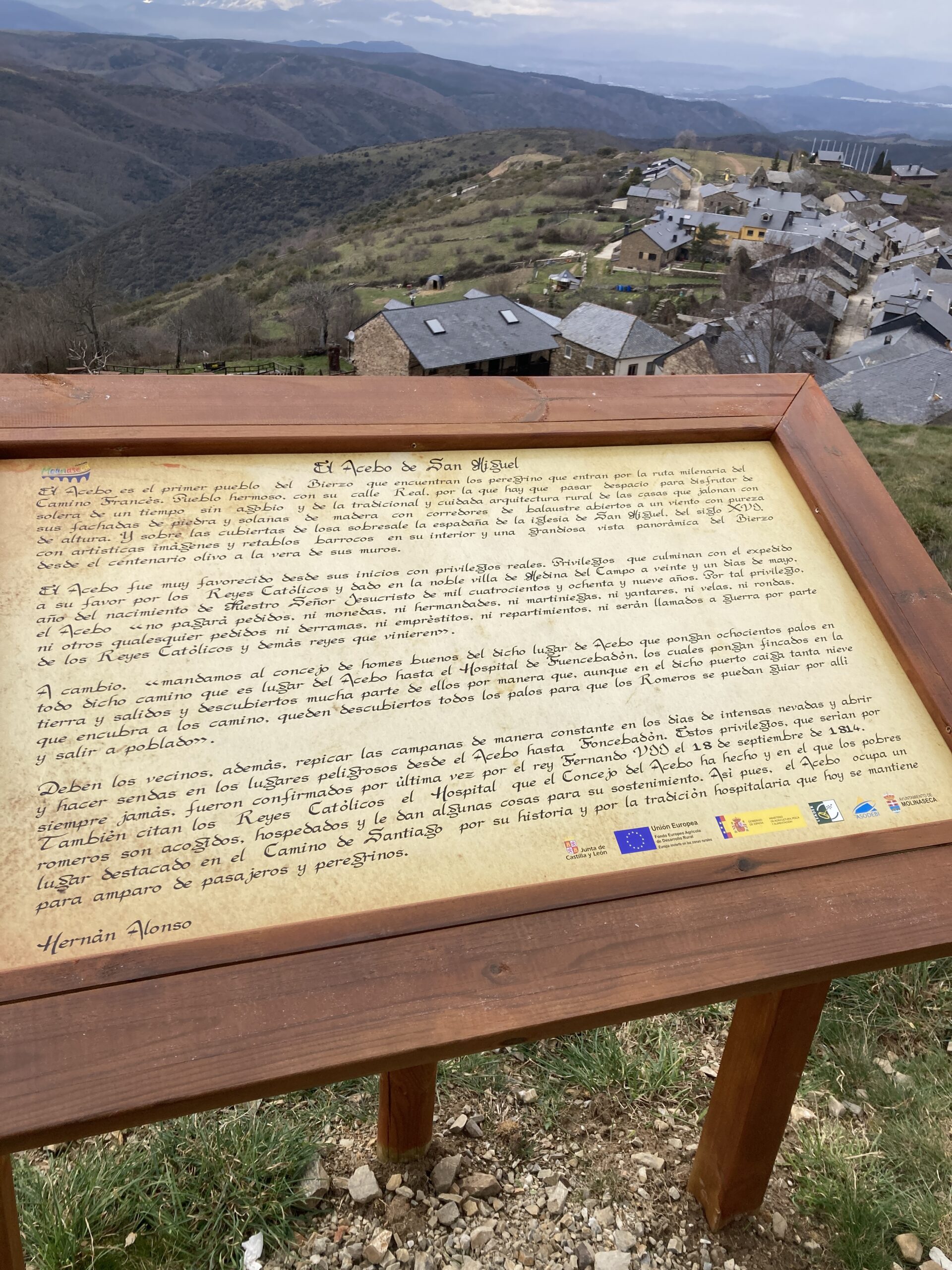
The route descends from the mountains towards El Acebo, Molinaseca and eventually Ponferrada. And this is exactly where we don’t recommend blindly following the yellow arrows. Sections of the traditional walking trail can become steep, rocky and technical. A strong mountain biker may enjoy riding them. Many other cyclists won’t.
For recreational riders, gravel cyclists carrying equipment, touring bikes and many e-bike riders, the nearby paved alternatives can create a considerably better descent. There is no prize for riding the most difficult possible version of the Camino. The objective is to experience the journey.
And on a long mountain descent, that also means keeping your speed under control and remembering that you’re travelling through an environment shared with walkers, vehicles and other cyclists.
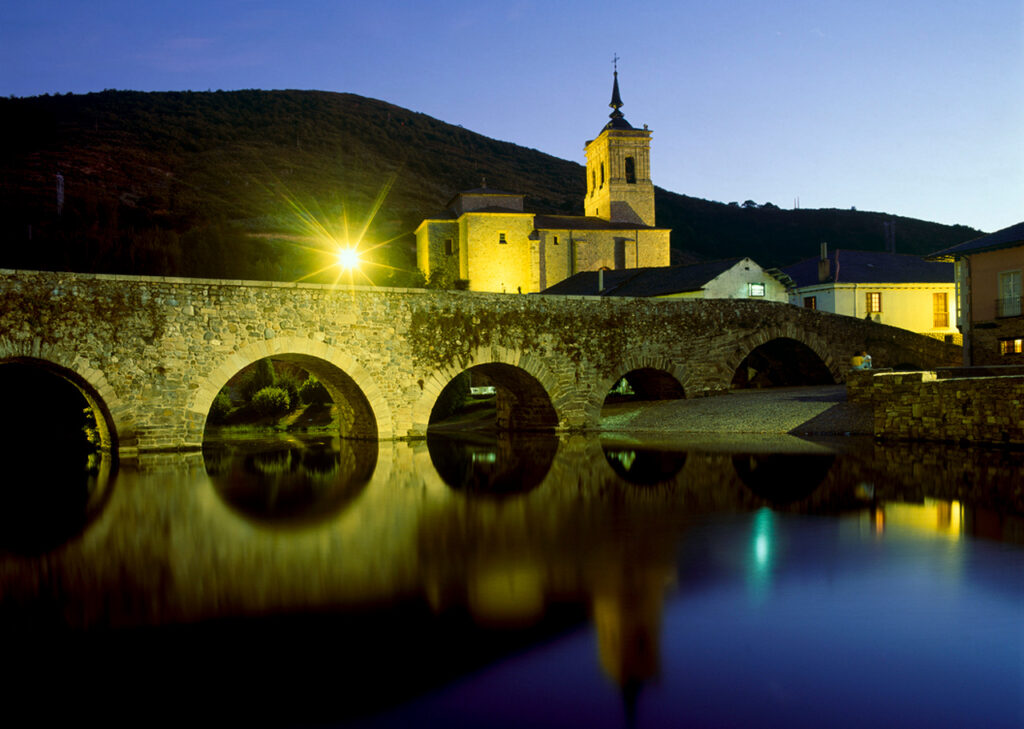
Before Ponferrada, Molinaseca makes an excellent stop. Its stone bridge, river and traditional streets make it one of those places where we’d rather spend half an hour with the bike parked beside us than save half an hour on the day’s stage.
Insider tip from our Live Love Ride guides: This is one of the sections where route choice really matters. Unless you’re a confident mountain biker specifically looking for technical terrain, don’t feel obliged to follow the walking trail on the roughest parts of the descent. Take the safer cycling alternative, enjoy the mountain descent and stop in Molinaseca before continuing to Ponferrada.
Then comes Ponferrada. Its enormous Templar Castle makes it one of the most immediately recognisable stops on this part of the French Way.
But Ponferrada also marks another change in the journey. You’re now in El Bierzo, a greener landscape surrounded by mountains and strongly associated with wine. Leaving the city, vineyards increasingly appear around the route as you continue towards Villafranca del Bierzo. This is Mencía country.
And it’s another reason we don’t think the Camino should be reduced to kilometres, elevation and yellow arrows. You’re travelling through distinctive food and wine regions, each with its own character.
Stop. Taste them. Just remember that you’re still riding afterwards.
Insider tip from our Live Love Ride guides: Don’t let O Cebreiro looming in the distance make you rush through El Bierzo. This is one of the nicest sections for slowing the journey down. If you’re interested in wine, try a local Mencía with dinner rather than turning the middle of a riding day into a tasting session. Your legs will appreciate the distinction.
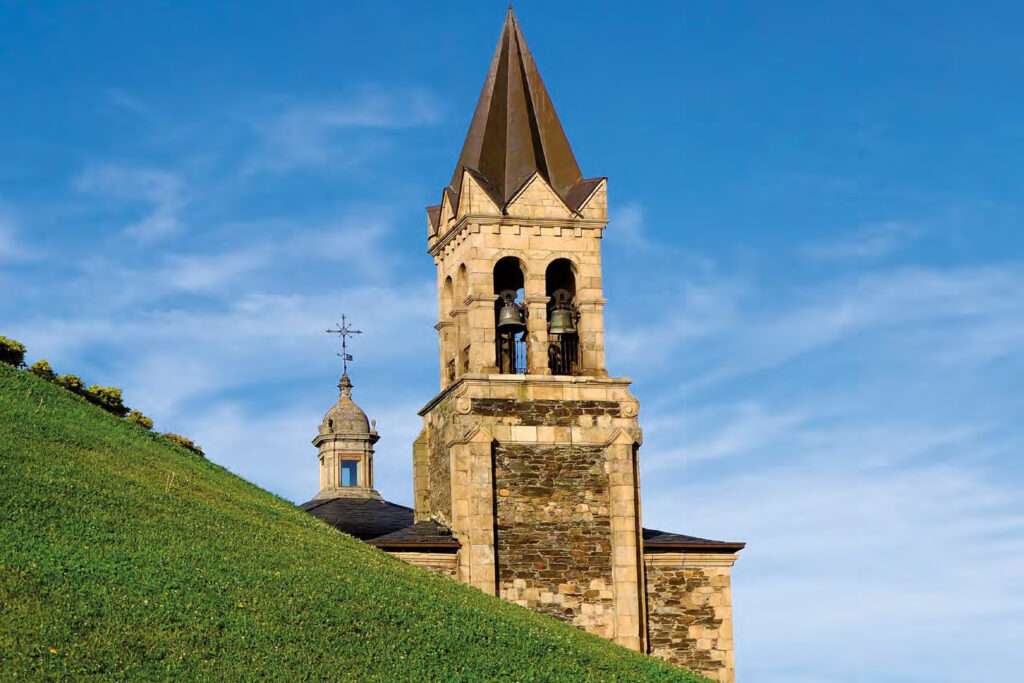 Villafranca del Bierzo: before the mountains
Villafranca del Bierzo is one of the most attractive towns on this section of the French Way and has been associated with the Camino for centuries. Its location also makes the geography of what’s coming next very obvious.
The mountains rise around you. Galicia is on the other side. And to get there, you’re going up. This is a good place to make sure both rider and bicycle are ready for the following section. Eat properly. Refill your bottles. Check the weather.
And if you’re riding an e-bike, think about battery management before you begin climbing rather than after you’ve used most of the charge.
Insider tip from our Live Love Ride guides: The climb doesn’t begin at the moment the road gets dramatically steep. Treat the entire approach as part of the climbing day. Ride conservatively out of Villafranca, eat before you’re hungry and drink before you’re thirsty. This isn’t the day to chase somebody else’s rear wheel for the first 20 kilometres.
The climb towards O Cebreiro is one of the defining physical challenges of cycling this section of the French Way. The village sits high in the mountains at the entrance to Galicia, and getting there feels significant however you approach it.
For cyclists, the experience depends enormously on your bike and route choice. Strong mountain bikers can use more of the traditional Camino. Gravel riders need to evaluate the surface and their technical ability. For touring bikes and less experienced riders, adapting sections onto suitable roads can make far more sense.
And an e-bike can transform the climb for recreational cyclists, but it doesn’t make battery management irrelevant. Use maximum assistance all morning and you may discover that the motor has considerably less enthusiasm than you do when the real climbing begins.
However you get there, O Cebreiro deserves a proper stop. The tiny mountain village is known for its traditional stone pallozas, its historic church and its centuries-long association with the pilgrimage. On a clear day, the views across the mountains can be magnificent. On a misty day, which is hardly unusual here, the village can feel almost otherworldly.
And something important has happened. You’ve ridden into Galicia.
Insider tip from our Live Love Ride guides: Carry an extra layer even when the weather below looks perfect. Conditions can change remarkably quickly with altitude here. On an e-bike, conserve assistance before the main ascent. And when you reach O Cebreiro, stop. Walk around. Have something to eat. You’ve just completed one of the landmark climbs of the Camino – don’t reduce it to a Strava segment.
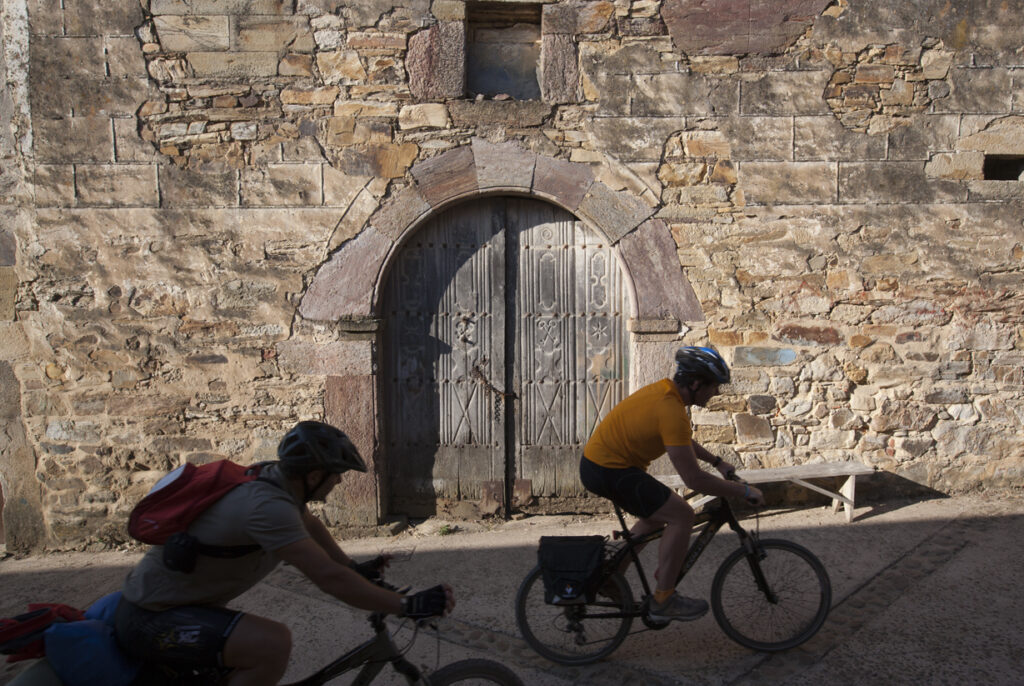
The transition into Galicia is immediate. The landscape becomes greener. Stone villages, forests, farms and rolling hills increasingly define the route.
But cyclists shouldn’t interpret the lush scenery as meaning that the hard riding is over. Galicia is relentlessly rolling. There may be fewer headline climbs than O Cebreiro, but the repeated short ascents and descents accumulate over a full day. This is also where the social character of the Camino changes.
More pilgrims begin their journey in Galicia, and the route becomes progressively busier as different starting points and Camino variants converge towards Santiago.
For cyclists, that creates a responsibility. You’re faster and heavier than somebody walking. Slow down before passing. Make yourself heard before you’re beside them. Give people space. And don’t expect a walker to leap out of the way because you’re trying to preserve your average speed.
The Camino belongs to everyone travelling it.
Insider tip from our Live Love Ride guides: A small bicycle bell is one of the most useful pieces of equipment you can carry in Galicia. Use it early and politely rather than shouting when you’re already behind someone. And don’t underestimate the terrain, those constant little Galician climbs can hurt considerably more on day five or six than they would on fresh legs.
Eventually, something begins to change. Signs for Santiago become more frequent. The distances get smaller. There are more walkers. More bicycles. More scallop shells. More people stopping beside signs to photograph numbers that wouldn’t have seemed important a week earlier.
Depending on the route, you’ll eventually approach Monte do Gozo – the Mount of Joy – historically associated with pilgrims’ first sight of Santiago. And then comes the final approach into the city. It isn’t the most spectacular cycling of the journey.
There are suburbs, roads and traffic, as there are around almost every historic European city. But nobody finishes the Camino talking about the suburbs. Because eventually the modern city gives way to the historic centre. The streets narrow. The stone buildings close around you.
And somewhere ahead is the Cathedral.
Insider tip from our Live Love Ride guides: Don’t schedule the final morning too tightly. This is not the day to worry about average speed or whether you can reach Santiago twenty minutes earlier. Give yourself time. Stop at Monte do Gozo if your route takes you there, enjoy the atmosphere and let the final kilometres happen slowly.
And then you reach the Praza do Obradoiro. The Cathedral of Santiago stands in front of you. Walkers drop their backpacks. Cyclists lean their bicycles against one another. People hug, laugh, cry, take photographs or simply sit on the stones looking at the cathedral.
For a few minutes, everyone has reached the same destination.
It doesn’t really matter whether you started in Saint-Jean-Pied-de-Port, Pamplona, Burgos, León or somewhere much closer. You followed the Camino west. And you arrived in Santiago by your own power. For cyclists seeking the Compostela, remember that the official requirement is at least 200 km by bicycle, with the journey documented through your pilgrim credential.
Insider tip from our Live Love Ride guides: When the historic centre gets busy, get off the bike. Walk those final streets rather than weaving between pilgrims to ride every last metre. Entering the Praza do Obradoiro slowly, beside people you’ve shared the Camino with, is a much better ending.
Don’t leave Santiago immediately There’s one last mistake we’d avoid. Finishing the Camino and immediately heading to the airport. Stay the night. Take a shower. Put on clothes that don’t contain Lycra. Go for a proper Galician meal. Then walk back to the Praza do Obradoiro without your bicycle. Sit somewhere for a while and watch. Every few minutes, somebody else arrives. Some have walked for a week, others for a month and some have cycled hundreds of kilometres.
You’ll see celebrations, exhausted faces, hugs between people who may not have known each other two weeks earlier and occasionally someone sitting silently on the ground taking everything in.
One last insider tip from our Live Love Ride guides: Come back to the square after you’ve finished your own Camino and watch other pilgrims complete theirs. You’ve spent the entire journey moving towards Santiago. It’s worth giving yourself one evening to simply be there.
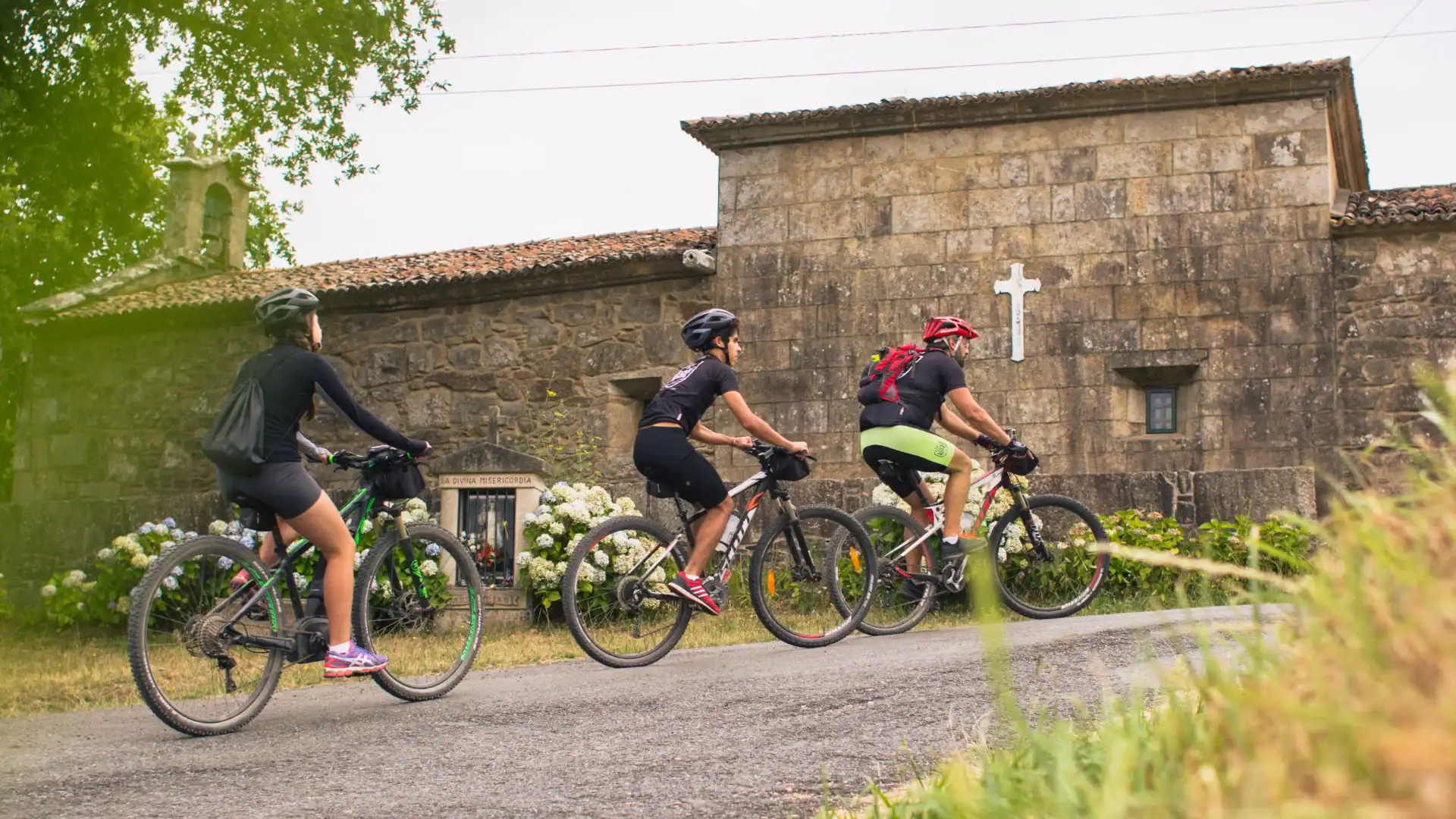
There isn’t one perfect bicycle for the Camino de Santiago.
The best choice depends on which Camino you’re riding, how closely you want to follow the traditional pilgrim trail and how comfortable you are on rough terrain.
For the French Way in particular, we’d generally choose between a mountain bike, gravel bike or e-bike. A touring bike can also work extremely well on a cycling-optimised version of the route.
The important word there is cycling-optimised.
A bicycle gives you the freedom to move between the historic Camino itself, gravel tracks and quiet secondary roads. Choosing the right combination is usually far more enjoyable than insisting on following every metre of a route originally travelled on foot.
If you want to stay close to the traditional Camino and ride as much of the original trail as reasonably possible, a mountain bike is probably the most versatile option.
The wider tyres, stable handling and more upright position give you confidence on loose gravel, rocky tracks and rougher descents. That’s particularly useful on sections where the surface can change quickly.
A mountain bike tour doesn’t mean you need to ride every technical section. We still divert onto better alternatives when the walking trail stops making sense on a bicycle.
But it gives you more freedom when the Camino gets rough.
For riders who prioritise comfort, stability and access to more of the traditional route over outright speed, it’s an excellent choice.
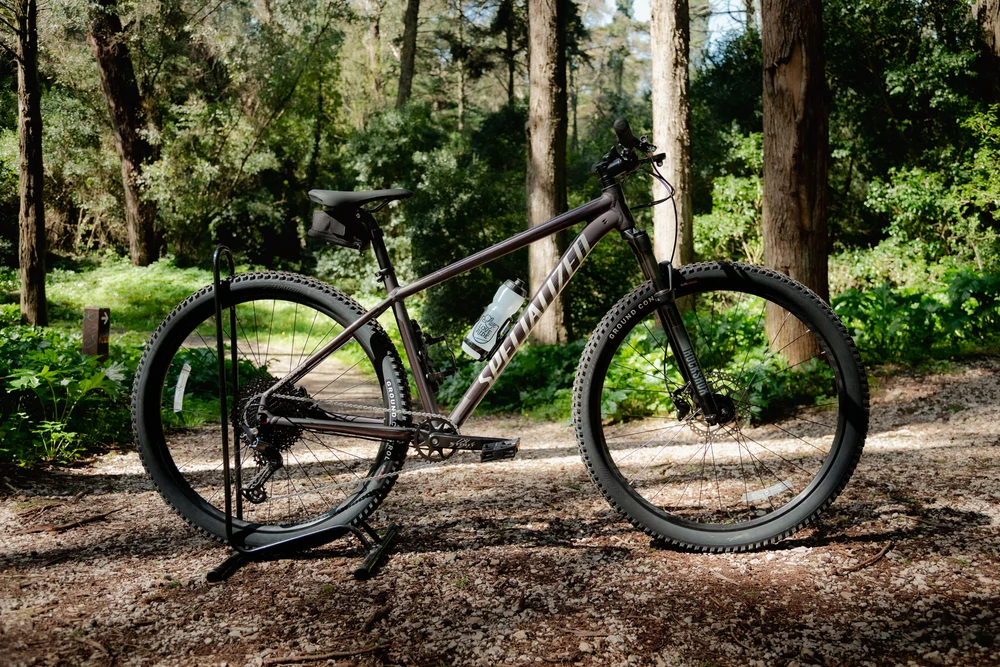
A gravel bike can be fantastic on the Camino. On smoother dirt tracks, secondary roads and rolling terrain, it’s quicker and more responsive than a mountain bike. For experienced cyclists accustomed to drop handlebars, it can make the long-distance nature of the journey particularly enjoyable.
But we’d add an important qualification. Not every section of the walking Camino is good gravel-bike terrain.
Rocky descents, loose surfaces and steep sections can quickly turn an enjoyable gravel ride into something unnecessarily technical. That’s not a problem if your route has been designed accordingly.
A good Camino gravel itinerary should combine the best rideable sections of the traditional trail with quieter paved roads and alternative tracks where necessary. For confident riders, that’s arguably one of the most enjoyable ways to cycle the French Way.
A touring bike provides comfort and stability over consecutive days and can work very well when paired with a cycling-optimised version of the French Way.
For recreational riders, we’d avoid some of the rougher sections of the traditional pilgrim trail and make greater use of quiet roads and smoother tracks.
What you gain is a more relaxed riding position and predictable handling.
This makes touring bikes particularly attractive to cyclists who aren’t interested in technical riding and see the bicycle primarily as a way of travelling through the Camino rather than tackling its trails.
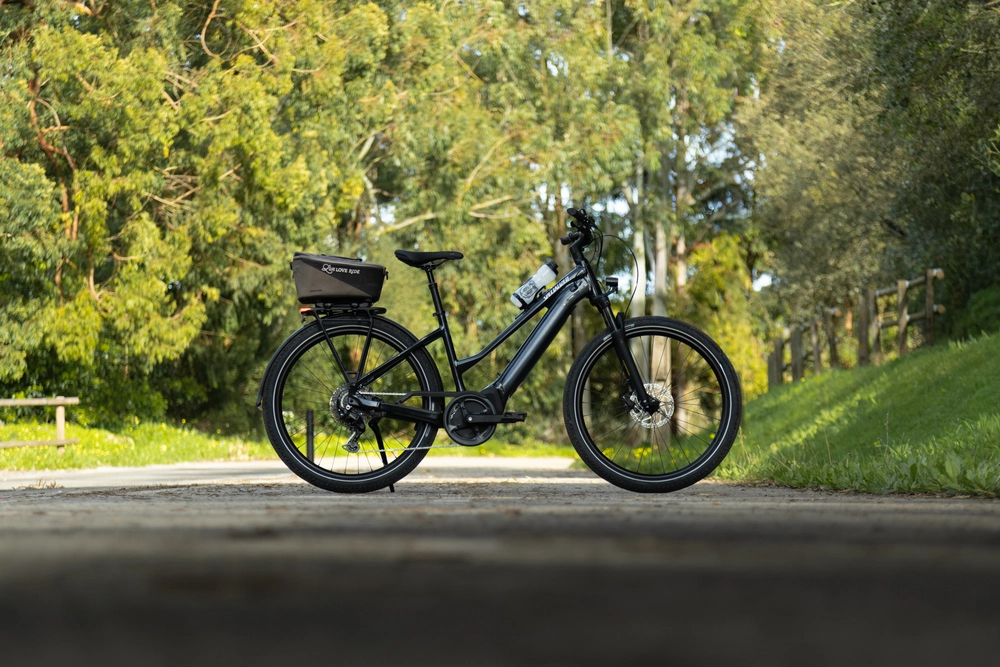
An e-bike tour can be one of the best ways to experience the Camino.
The French Way from León includes real climbing. Cruz de Ferro, O Cebreiro and the constant rolling terrain of Galicia shouldn’t be underestimated, particularly when you’re riding on consecutive days.
Electric assistance allows riders to manage those climbs while still pedalling and experiencing the journey under their own power. It’s particularly useful for couples or groups with different fitness levels, allowing everyone to travel together without stronger cyclists constantly waiting or less experienced riders feeling pressured to keep up.
But an e-bike requires slightly different planning. Battery range matters. Charging needs to be considered. The bicycle is heavier if you need to manoeuvre it through a rough or unrideable section.
And our guides have one particularly simple piece of advice:
Don’t use maximum assistance just because it’s available.
Save the higher assistance modes for the places where they actually matter – especially the major climbs.
Yes – but we’d change the route. A pure road bike isn’t designed for many of the unpaved sections of the traditional Camino.
That doesn’t mean a road cyclist can’t experience the French Way.There are plenty of excellent secondary roads that allow you to connect the same historic towns, mountain passes and Camino landmarks while avoiding terrain inappropriate for narrow road tyres.
You’d still travel from León through Astorga, El Bierzo and Galicia towards Santiago. You’d still visit Cruz de Ferro. You’d still climb towards O Cebreiro. And you’d still arrive at the Cathedral.
You simply wouldn’t pretend that riding every yellow arrow is necessary for the journey to count.
For most riders:
Mountain bike – maximum versatility and confidence on the traditional Camino terrain.
Gravel bike – our choice for experienced cyclists who want a faster, more dynamic ride.
Touring bike – excellent for recreational cyclists prioritising comfort and non-technical riding.
Road bike – possible, but with a route specifically adapted for road cycling.
Ultimately, we’d choose the bicycle after choosing the rider and the route, not the other way around.
The Camino isn’t better because you rode the roughest possible trail.
It’s better when the bike disappears underneath you and lets you concentrate on where you’re going, what you’re seeing and the people you’re sharing the journey with.
The Camino can be travelled throughout much of the year, but the experience changes enormously with the seasons.
On the French Way, this matters even more because you’re crossing very different landscapes and elevations. Conditions in León or El Bierzo can be completely different from those at Cruz de Ferro, O Cebreiro or in Galicia on the same day.
For cycling, our favourite periods are late spring and early autumn.
You generally get comfortable temperatures, long enough days and good riding conditions without the combination of heat and crowds that can make the height of summer less enjoyable.
Spring is one of our favourite times to cycle the French Way.
The landscapes are green, temperatures are generally comfortable for long days on the bike and there are fewer pilgrims than during the busiest summer months.
May and June are particularly good choices.
By then, the days are longer and the probability of very cold conditions in the mountains has reduced, although this is northern Spain: rain and sudden changes in weather are always possible.
Galicia doesn’t become green by accident.
Early spring requires more caution. High sections around Cruz de Ferro and O Cebreiro can still experience cold, rain, fog and occasionally late snow.
If you’re travelling in April, pack for considerably more than the weather forecast in León might suggest.
Insider tip from our Live Love Ride guides: Don’t pack for the warmest place on your itinerary. Pack for the highest. A beautiful morning in El Bierzo tells you surprisingly little about what conditions will be like when you reach O Cebreiro.
July and August bring long days and generally more stable weather, but they’re not necessarily when we’d choose to cycle the Camino.
The first issue is heat.
Exposed sections of Castilla y León can become extremely warm during the afternoon, particularly when you’re riding away from the higher mountain areas.
The solution is straightforward: start early.
Get the majority of the day’s riding done during the cooler morning hours and leave yourself time for a long lunch or relaxed afternoon at the destination.
The second issue is people.
Summer is a busy period on the Camino, and the final sections through Galicia can have large numbers of walkers. That’s not necessarily negative – the social atmosphere is one of the things that makes the Camino special – but cyclists need to be particularly considerate on shared trails.
If you enjoy solitude, there are better months.
If you enjoy the communal side of the Camino, summer can be great fun.
If we had to choose one period for cycling the French Way, September would be very difficult to beat. Temperatures generally become more comfortable, the landscapes begin changing and there is still plenty of daylight for relaxed cycling stages. It’s also a wonderful time to travel through El Bierzo, particularly if you’re interested in the region’s wine culture and harvest season.
October can also be excellent, particularly during the first half of the month. But as autumn progresses, daylight becomes shorter and weather in the mountains and Galicia becomes increasingly unpredictable.
That doesn’t make October a bad choice. It simply means carrying proper layers and accepting that a Camino without at least the possibility of rain isn’t really a sensible expectation.
Insider tip from our Live Love Ride guides: September is one of our favourite months because you can start riding comfortably in the morning without needing to race the heat, while still having enough daylight to stop whenever the Camino gives you a reason to.
Winter is a very different proposition.
It is possible to cycle parts of the Camino, but we wouldn’t normally recommend the French Way as a conventional multi-day cycling holiday during the heart of winter. The biggest issue isn’t simply temperature. The route crosses mountainous areas at significant elevation, and snow, ice, heavy rain, strong winds and poor visibility can affect the higher sections.
Some pilgrim accommodation and tourism services also operate seasonally, so the infrastructure available during spring, summer and early autumn shouldn’t automatically be assumed in winter.
For experienced riders specifically looking for a winter adventure, that’s one thing.
For most cyclists who want to enjoy the Camino rather than battle the conditions, we’d wait.
For the section between León and Santiago, we’d broadly think about the season like this:
April: Possible, but prepare for variable mountain weather.
May: Excellent.
June: Excellent, with long days.
July-August: Good, but hotter and busier; start early.
September: Excellent – probably our favourite.
October: Very good, particularly earlier in the month, but increasingly unpredictable.
November-March: Not our normal recommendation for a cycling holiday.
If you’re flexible, we’d choose May, June or September.
But whatever month you choose, remember that you’re crossing northern Spain rather than riding around a Mediterranean resort.
Bring a waterproof. Bring layers. And don’t complain too much about the rain when you reach Galicia. It’s the reason everything looks like Galicia.
Part of the experience of travelling the Camino is carrying a Credencial del Peregrino, or Pilgrim’s Credential. Think of it as the passport of your Camino.
As you travel towards Santiago, you collect sellos, or stamps, from places along the route. Churches, pilgrim hostels, hotels, town halls and other establishments can provide them. By the time you reach Santiago, your Credencial becomes a physical record of the journey you’ve just completed.
Even if receiving a certificate isn’t particularly important to you, we’d still recommend carrying one. There’s something satisfying about watching those empty spaces gradually fill as Santiago gets closer.
The Compostela is the traditional certificate issued by the Cathedral of Santiago to pilgrims who complete the required pilgrimage and meet its conditions. And there’s an important distinction for cyclists:
Walkers must complete at least the final 100 km. Cyclists must complete at least the final 200 km.
This is one reason León works so well as a starting point for cyclists. The journey to Santiago comfortably exceeds the required cycling distance, rather than designing your entire Camino around completing the absolute minimum.
The Cathedral also specifies the religious or spiritual intention associated with the traditional Compostela, so it’s worth understanding that the Compostela is not simply a sporting certificate for covering a particular number of kilometres. If what you want is an official record of the route and distance you’ve travelled, the Pilgrim’s Office also offers a separate Certificate of Distance, which records your starting point, route and kilometres completed.
The official Pilgrim’s Office states that pilgrims seeking the Compostela should have at least two stamps per day, and for cyclists this requirement applies over the final 200 km.
Don’t treat collecting stamps as an administrative chore you remember at the end of the day. Make it part of the journey.
Get one where you stop for coffee. Another at a church, hotel or restaurant. Ask for one somewhere memorable. By Santiago, you’ll have a much more interesting Credencial than if every stamp simply comes from your accommodation.
Insider tip from our Live Love Ride guides: Get into the habit of stamping your Credencial from the beginning rather than suddenly remembering the rules 200 km from Santiago. And always put it somewhere waterproof. A week of beautiful Camino stamps and one Galician downpour are not an ideal combination.
The official Credencial issued by the Cathedral of Santiago, or one distributed through an organisation authorised by it, is accepted for the Compostela.
You can find more information about obtaining and using the Credencial on the official Pilgrim’s Office website. You can get at at the Cathedral in León, for instance.
On our organised Camino journeys, we always provide a pilgrim’s passport to all guests.
Once you’ve completed your Camino, the final process takes place at the Pilgrim’s Reception Office in Santiago de Compostela, where qualifying pilgrims can present their Credencial and receive the Compostela – the office is just nearby the Cathedral.
During periods of high pilgrim traffic, don’t assume you’ll necessarily walk straight in and collect it immediately. The Pilgrim’s Office uses a ticket and QR-code system to manage the queue, and same-day collection may not always be possible when demand is particularly high.
Which gives us another reason for the advice our guides gave earlier: Don’t book a flight out of Santiago two hours after you expect to finish the Camino.
Arrive. Enjoy the square. Get your Compostela if you’re collecting one. Have dinner. Stay the night. You’ve just cycled hundreds of kilometres to get there. Santiago deserves more than a hurried transfer to the airport.
One of the pleasures of cycling the Camino is that every day isn’t defined only by where you ride.
You’re travelling through regions with their own food, wines, traditions and identities. Over the relatively short distance between León and Santiago, those differences can be remarkable.
And because you’re travelling by bicycle, food becomes part of the rhythm of the journey. Coffee somewhere along the Camino. A simple lunch in a village. A local dish after a difficult climb. A glass of wine when the bikes have been put away for the evening.
Our advice is simple: eat according to where you are.
León deserves an evening before you start cycling. The historic centre is compact and easy to explore on foot, and the areas around Barrio Húmedo and Barrio Romántico are filled with bars where going for a drink and moving from place to place is part of the experience.
León is particularly famous for the tradition of serving a small tapa with your drink, making an evening wandering between bars one of the best introductions to the city.
The local cuisine is substantial, which makes sense when you consider the colder climate and landscapes of the province. Look out for cecina de León, the region’s cured beef, as well as local cheeses and cured meats.
But the night before your first stage probably isn’t the moment to discover how much food and wine you can consume in northern Spain.
Insider tip from our Live Love Ride guides: Don’t book a long formal dinner for your only evening in León. Go out and explore the tapas bars instead. You’ll see more of the city and begin the Camino in a much more Leonese way.
Astorga has a surprisingly strong connection with chocolate. The city became an important centre of chocolate production after cacao arrived in Spain from the Americas, and that heritage survives in traditional chocolate shops and the city’s chocolate museum.
For cyclists, this is obviously extremely useful cultural research 😉
Try some. Then put some in your jersey pocket. Outside Astorga, the food becomes closely associated with the Maragatería, particularly its most famous dish, cocido maragato. As we mentioned earlier, the unusual part is the order in which it’s eaten. Meat comes first, followed by chickpeas and vegetables, with the soup arriving last. It’s a wonderful meal and part of the culture of this section of the Camino.
It’s also enormous.
Insider tip from our Live Love Ride guides: Cocido maragato is something to experience, but preferably when you don’t have a major climb immediately afterwards. If you’re riding towards Cruz de Ferro the same day, restraint is a surprisingly useful cycling skill.
Descending from the mountains into El Bierzo, both the landscape and the food begin to change. This is one of the most interesting wine regions you’ll cross on the French Way.
The red grape most closely associated with Bierzo is Mencía, producing wines that can be fresh, aromatic and remarkably elegant. You’ll also increasingly encounter Godello, one of northwestern Spain’s most interesting white varieties. The vineyards around Ponferrada and Villafranca del Bierzo aren’t simply scenery beside the Camino. They’re part of a wine culture that has existed here for centuries.
If wine interests you, this is somewhere we’d deliberately make time for it.
Just make that time after the day’s ride.
The region also has its own distinctive food traditions, including botillo del Bierzo, a substantial cured pork speciality traditionally served with potatoes and vegetables. This is mountain food rather than cycling nutrition. And that’s absolutely fine once the bicycle is parked.
Insider tip from our Live Love Ride guides: Save the proper Mencía tasting for the evening. El Bierzo is too interesting a wine region to ignore, but several glasses at lunch followed by a mountain bike is not the cultural immersion we’d recommend.
Crossing into Galicia at O Cebreiro changes more than the scenery. This tiny mountain village is associated with one of Galicia’s best-known cheeses, Queixo do Cebreiro, traditionally made from cow’s milk and recognisable by its unusual shape. After the climb, this is exactly the kind of local food worth trying.
O Cebreiro also introduces you to the kind of simple, hearty cooking you’ll encounter increasingly as you continue west. And on a cold or misty mountain day, Galician food starts making considerably more sense.
Insider tip from our Live Love Ride guides: Even if the weather is good below, O Cebreiro can be cold and damp. A warm meal here can be considerably more appealing than whatever energy bar has spent the last four hours in your jersey pocket.
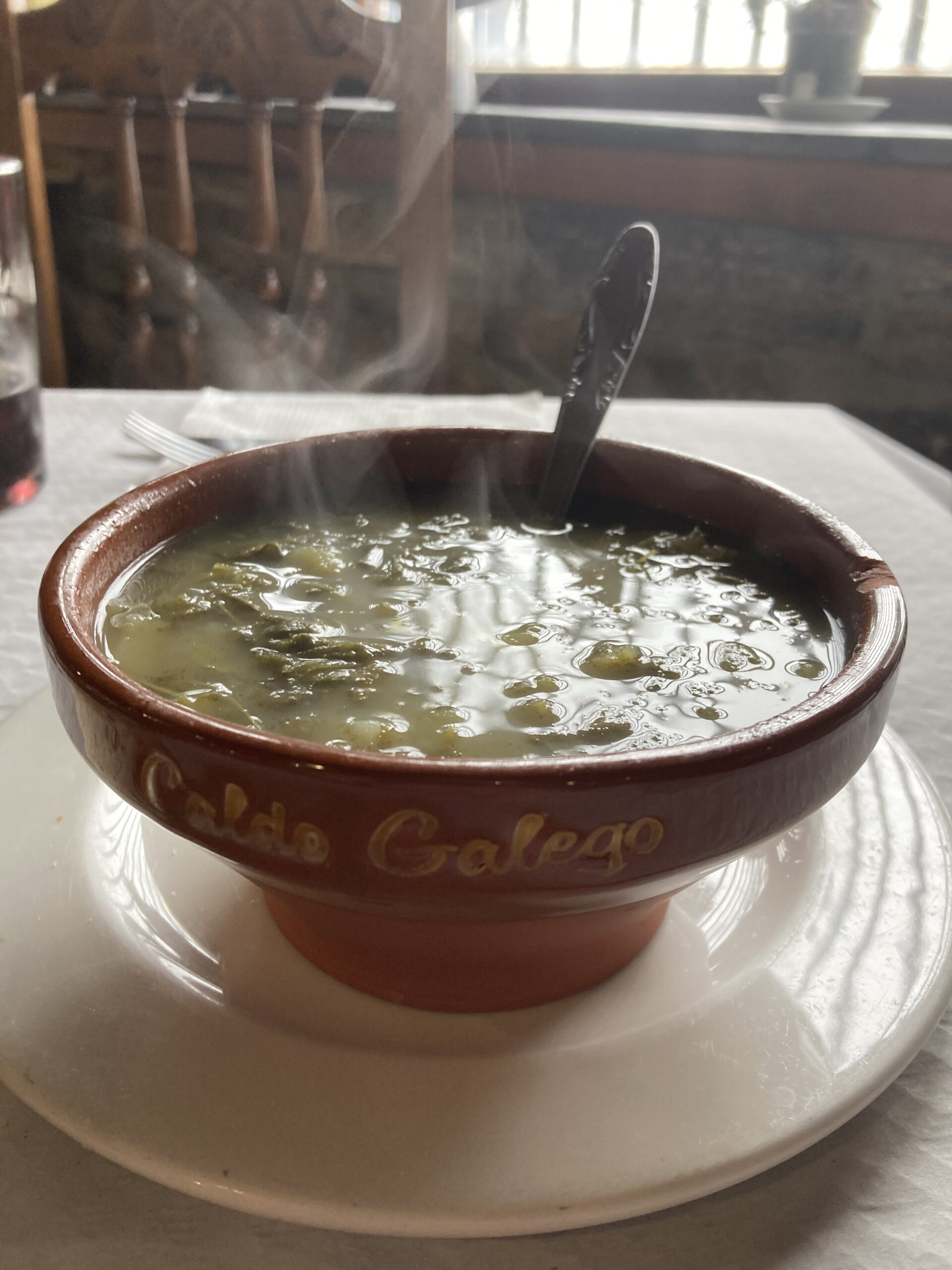
Once you’re properly into Galicia, eating becomes one of the great pleasures of the Camino. The most famous dish is probably pulpo á feira, octopus traditionally served with olive oil, salt and paprika. You’ll find it throughout Galicia, often served on wooden plates and eaten communally.
Then there’s empanada gallega, which might contain tuna, meat, cod, shellfish or other fillings depending on where you are.
For cyclists, empanada has one enormous advantage beyond being delicious. It’s almost suspiciously good cycling food.
You’ll also encounter Galician beef, local cheeses, seafood and simple dishes built around excellent ingredients rather than elaborate presentation.
And then there are the wines. As you move further west, Galicia introduces you to varieties and regions completely different from Bierzo. Albariño from Rías Baixas is the internationally famous example, although Galicia’s wine culture extends far beyond one grape.
Insider tip from our Live Love Ride guides: Don’t spend the whole Camino ordering the generic pilgrim menu because it’s convenient. Those menus can be perfectly useful, but occasionally walk another street, ask what’s local and eat something specific to the place you’ve just spent the day riding through.
Santiago deserves a proper final dinner. You’ve spent days thinking about kilometres, weather, climbs, route choices and what time you’re getting on the bike tomorrow. Tonight, none of that matters.
Galician seafood is an obvious place to start. Depending on the season and restaurant, you might encounter pulpo, scallops, clams, mussels, percebes or other Atlantic shellfish.
The scallop has particular significance here. The vieira, or scallop shell, has been associated with the pilgrimage to Santiago for centuries and remains one of the universal symbols of the Camino.
You’ll have followed versions of it on signs and waymarkers all the way to the city. Eating one when you arrive is optional.
A glass of Galician wine is considerably harder for us to argue against.
And eventually there should probably be a slice of Tarta de Santiago, the traditional almond cake decorated with the Cross of Saint James.
Insider tip from our Live Love Ride guides: Don’t make your final dinner about finding the fanciest restaurant in Santiago. Find somewhere serving excellent Galician food, order several things for the table and talk about the journey you’ve just finished. By this point, everyone normally has a favourite day, a hardest climb and at least one story that becomes considerably funnier over dinner.
It’s easy to approach a cycling trip by thinking in stages.
León to Astorga; Astorga to El Bierzo; O Cebreiro; Galicia; Santiago.
But some of the things you’ll remember won’t happen while you’re pedalling. They’ll happen around a table.
A piece of chocolate in Astorga. Cocido in the Maragatería. Your first Mencía in El Bierzo. Cheese after climbing O Cebreiro. Pulpo somewhere in Galicia. Tarta de Santiago when there’s nowhere left to cycle tomorrow.
The Camino is a journey through northern Spain, and eating your way across it is part of understanding where you’ve been.
The Camino de Santiago already exists. Our job isn’t to reinvent it. Our job is to make it work beautifully by bicycle.
That means preserving the history, landscapes, villages and atmosphere that make the Camino special, while making intelligent decisions about routes, bikes, accommodation and logistics along the way.
One of the biggest mistakes you can make when planning the Camino by bike is assuming that a walking route automatically makes a good cycling route. Sometimes it does.
There are wonderful stretches of gravel track and traditional Camino that are a pleasure to ride. But there are also rocky descents, steep trails, busy sections and places where a quiet secondary road provides a much better experience. We adapt our routes according to the type of bike and rider, using the traditional Camino where it makes sense and good cycling alternatives where it doesn’t.
The objective isn’t to follow every yellow arrow at all costs. It’s to experience the Camino properly while enjoying the riding.
Different cyclists experience the Camino differently. A confident mountain biker may want to ride more of the original trail. An experienced gravel cyclist may prefer a faster combination of tracks and roads. A recreational cyclist may be much happier on an e-bike with a route adapted to avoid unnecessarily technical terrain.
That’s why we don’t believe there is one bicycle that everybody should ride on the Camino.
We work with mountain bikes, gravel bikes and e-bikes, matching the bike and route to the cyclist rather than forcing every rider into the same experience.
A multi-day Camino involves much more than following a GPX file towards Santiago.
Bikes need to work. Luggage needs to reach the next hotel. Routes need to make sense. Transfers need to connect. And if something unexpected happens along the way, it’s useful to have somebody who knows the route and the region. Our local team operates cycling journeys throughout Portugal and Spain, with our own bicycle fleet, support vehicles and experienced cycling guides.
On our Camino journeys, we take care of the logistics so you can concentrate on the part that matters: riding towards Santiago.
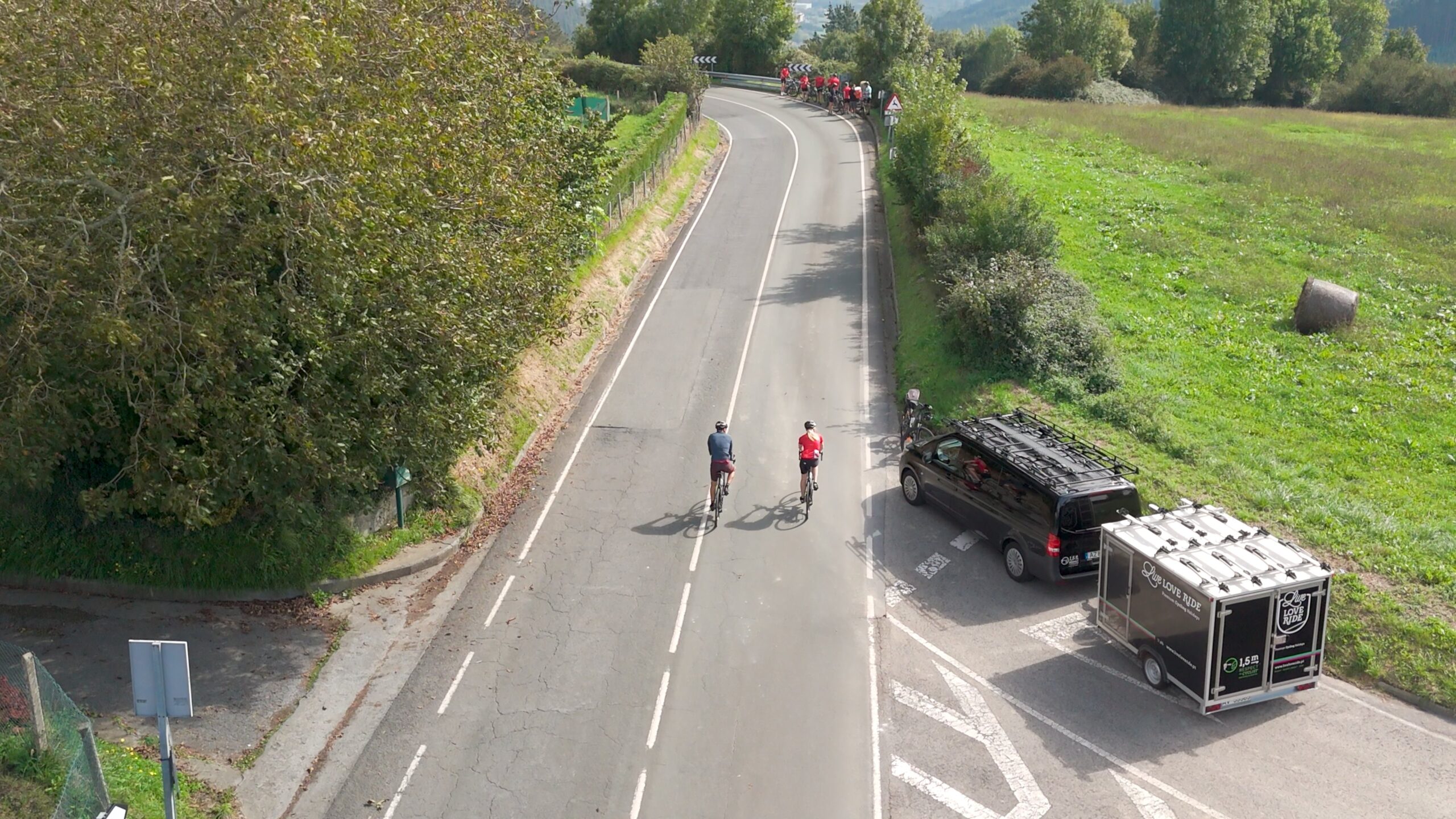
Support van and group on a guided bike tour
There isn’t one right way to experience the Camino. Some cyclists want the independence of riding at their own pace, stopping whenever they want and navigating the journey themselves. Others prefer travelling with a guide who knows the route, manages the details and can explain the landscapes, history, food and culture you’re encountering along the way.
We design both guided and self-guided cycling journeys, depending on the experience you’re looking for.
Whichever you choose, the route, bike and logistics should be built around cycling rather than simply adapted at the last minute from a walking itinerary.
The advice throughout this guide comes from the same principle we use when designing our tours: ride it, understand it and keep improving it. Knowing that a trail exists on a map isn’t the same as knowing whether it’s enjoyable on a gravel bike after three days of rain. Knowing the elevation of O Cebreiro isn’t the same as understanding where a recreational cyclist will appreciate electric assistance.
And knowing the shortest route into Santiago isn’t the same as knowing which route creates the better ending to a week on the Camino.
Those details matter to us.
Our French Way bike tour from León to Santiago follows one of our favourite sections of the Camino, crossing the mountains of León, El Bierzo and Galicia before finishing in Santiago de Compostela.
You can also explore our Camino de Santiago bike tours to discover our current journeys and start planning your own ride towards Santiago.
The difficulty depends enormously on the Camino, your starting point, the type of bike you use and how closely you follow the traditional walking trail.
On the French Way from León, expect consecutive days of riding, significant climbing around Cruz de Ferro and O Cebreiro, and plenty of shorter climbs through Galicia.
You don’t need to be an elite cyclist, but you should be comfortable spending several hours on a bicycle on consecutive days.
For recreational cyclists concerned about the climbing, an e-bike can make the Camino considerably more accessible without taking away the experience of travelling the route by bicycle.
Yes, provided the itinerary, bike and daily distances are chosen appropriately.
For a beginner, we wouldn’t recommend simply downloading the walking Camino and attempting to follow every trail. A cycling-optimised route can avoid unnecessarily technical sections while preserving the important towns, landscapes and landmarks of the Camino.
We’d also strongly consider an e-bike for less experienced cyclists. It gives you a
ssistance on the longer climbs and makes it easier to manage several consecutive days of riding.
There is no required distance simply to travel the Camino. You can start wherever you choose.
If you want to qualify for the traditional Compostela, however, cyclists must complete at least the final 200 km to Santiago and meet the other requirements established by the Pilgrim’s Office.
You can check the current requirements directly with the official Pilgrim’s Office in Santiago.
That depends entirely on where you start.
Cycling the complete French Way from Saint-Jean-Pied-de-Port is a major journey and typically requires around two weeks at a recreational touring pace.
Starting further west allows you to create a shorter Camino. León is particularly well suited to a journey of around one week, while still giving cyclists a substantial ride through some of the most varied landscapes of the French Way.
We generally prefer moderate daily distances rather than trying to cover as many kilometres as possible. The Camino becomes much more interesting when you have time to stop in the villages, visit the historic sites and enjoy where you’re travelling through.
There isn’t one best starting point.
Saint-Jean-Pied-de-Port is the classic choice for cyclists wanting to experience the complete French Way. Pamplona gives you Navarra and La Rioja without the initial Pyrenean crossing. Burgos introduces the landscapes of the Meseta, while León is our favourite starting point for a Camino of around one week.
For the Northern Way, cyclists can begin around Saint-Jean-de-Luz, Irún or San Sebastián and follow the northern coast of Spain towards Galicia.
You can also approach Santiago from the south on the Portuguese Way. If that interests you, read our guide to cycling the Portuguese Camino.
Not always. The yellow arrows primarily guide pilgrims along a route travelled on foot. Some sections are excellent to cycle, while others can be steep, rocky, narrow, crowded or unnecessarily technical on a bicycle.
We believe the best approach is to preserve the character of the Camino while adapting the route intelligently for cycling.
That might mean riding the traditional trail through one section and using a nearby gravel track or quiet secondary road through another.
Your bike matters too. A mountain biker can comfortably ride terrain that
may be inappropriate for a touring or road bike. Following every yellow arrow isn’t what makes your journey a Camino.
For most cyclists, we’d choose a mountain bike or e-bike.
A mountain bike gives you the greatest versatility on rougher sections. A gravel bike is faster and more dynamic for experienced riders when the route is adapted appropriately.
An e-bike or e-MTB is an excellent option for recreational cyclists, riders concerned about the climbing or groups with different fitness levels.
Absolutely. An e-bike is particularly useful on the French Way because the route includes substantial climbing and several consecutive days in the saddle.
The important considerations are battery range, charging and bike handling. An e-bike is heavier than a conventional bicycle, which makes avoiding unnecessarily technical sections even more important.
Use the assistance intelligently rather than spending the entire morning in the highest mode. Saving battery for climbs such as O Cebreiro can make a significant difference.
No. Some cyclists choose to travel independently with panniers or bikepa
cking bags, and that can be a fantastic way to experience the Camino. But you don’t need to carry everything yourself.
On an organised cycling tour, your main luggage can be transferred between accommodations while you ride with only what you need for the day. For most recreational cyclists, that means a more enjoyable bicycle to ride and considerably less weight to carry over the climbs.
Both can work extremely well.
A self-guided Camino gives you independence. You can ride at your own pace, stop whenever you want and experience the journey with your own group while having the route and logistics organised in advance.
A guided Camino adds local knowledge and support throughout the journey. A good guide can help with route decisions, explain the places you’re travelling through, manage unexpected situations and introduce you to the food, wine, history and culture of each region.
The better choice depends less on cycling ability and more on the type of experience you want.
For the French Way, our favourite months are generally May, June and September. Spring offers green landscapes and comfortable riding temperatures, while September combines generally excellent cycling conditions with the beginning of the autumn season.
July and August are possible but can be hot and busy, particularly as you approach Santiago. October can also be excellent, although weather becomes increasingly unpredictable as the month progresses.
We wouldn’t normally recommend the higher sections of the French Way as a conventional cycling holiday during the heart of winter.
Some sections can be, particularly as you approach Santiago and during the busiest months. This doesn’t necessarily detract from the experience. Meeting pilgrims from around the world is part of what makes the Camino different from a normal cycling route.
But cyclists need to respect the fact that they’re sharing the trail with people travelling much more slowly. Reduce your speed, give walkers plenty of room and make yourself heard before passing. A small bicycle bell is particularly useful.
You don’t need a Credencial simply to ride the Camino, but we’d recommend carrying one even if you’re not particularly interested in receiving the Compostela. Collecting stamps along the route becomes part of the journey, and by Santiago your Credencial provides a physical record of the places you’ve travelled through.
If you intend to apply for the Compostela, you’ll need an accepted Credencial and must comply with the Cathedral’s stamping and pilgrimage requirements.
Yes, and it creates a very different Camino experience. The Portuguese Way approaches Santiago from the south, with the Central and Coastal routes offering different landscapes and levels of difficulty.
The Coastal route combines northern Portugal with Atlantic scenery and generally gentler terrain during its earlier stages, while the Central route follows a more historic inland corridor and includes some considerably tougher riding.
We operate cycling journeys towards Santiago from both Portugal and Spain. You can explore our Portuguese Camino bike tours or read our complete guide to cycling the Portuguese Camino to compare the different approaches.
The Camino is one of those journeys that can be experienced in many different ways.
You can cross northern Spain from the Pyrenees, begin among the vineyards and historic cities of the French Way, ride the coastal landscapes of the Camino del Norte or start further west for a shorter journey towards Santiago.
For cyclists, we particularly love the section from León. It combines some of the great landmarks of the French Way with mountain riding, historic towns, the vineyards of El Bierzo and the green landscapes of Galicia, all within a journey that works beautifully over approximately one week.
Explore our Camino de Santiago bike tours to discover the different ways you can experience the Camino with Live Love Ride.
If the journey described in this guide sounds like your kind of adventure, our French Way bike tour from León to Santiago follows one of our favourite sections of the Camino.
Starting in León, you’ll ride through Astorga and the Maragatería, climb towards Cruz de Ferro, descend into El Bierzo, cross the mountains into Galicia at O Cebreiro and continue west until you finally reach Santiago de Compostela.
It’s a journey built around more than simply reaching the Cathedral. The route, accommodation, bikes and support are designed so that you have time to experience the landscapes, food, history and people that make the Camino special.
Spain isn’t the only way to reach Santiago by bike.
The Portuguese Camino approaches Galicia from the south and offers a completely different journey, combining historic Portuguese towns, Atlantic landscapes and the choice between the Coastal and Central routes.
If you’re deciding between the two, explore our Portuguese Camino bike tours or read our guide to cycling the Portuguese Camino.
Whichever route you choose, they eventually have something in common.
They all lead to Santiago.
Written by Pedro Rocha and the Live Love Ride crew ake sure to contact us at ridewith us (@) liveloveride.pt if you have any contributions for this article – we’d love to hear from you!