
You can climb through the dramatic limestone mountains of Mallorca, follow empty roads between the white villages of Andalucía, ride from the green hills of the Basque Country to the Atlantic, explore vineyards in La Rioja or spend a week following the ancient Camino de Santiago across northern Spain.
The landscapes change. The food changes. The architecture, wine and even languages change. And that’s exactly what makes a cycling holiday in Spain so rewarding.
At Live Love Ride, we’ve spent more than a decade designing journeys across Portugal and Spain. Our team explores these regions by bike, searching for the roads, hotels, restaurants and local experiences that turn a good cycling route into an unforgettable journey.
In this guide, we’ll share some of our favourite places to cycle in Spain, from the regions every cyclist should experience at least once to the roads, climbs and cultural experiences that make each one unique.
Whether you’re looking for challenging road cycling, a relaxed e-bike journey through wine country or a premium cycling holiday combining beautiful riding with exceptional hotels and gastronomy, there’s a part of Spain waiting for you.
Looking for a cycling holiday in Spain? Explore our best cycling destinations in Spain and discover our guided and self-guided journeys across the country.
Few countries offer cyclists the variety you’ll find in Spain.
In the north, green mountains descend towards the Atlantic and quiet roads connect fishing villages, historic cities and some of Europe’s most celebrated food destinations. Travel south and the landscape changes completely, with olive groves, whitewashed villages and mountain roads crossing the warm, open landscapes of Andalucía.
Then there are places that have become destinations in their own right. Mallorca’s Serra de Tramuntana offers some of Europe’s most iconic road cycling. Girona has become a home away from home for professional cyclists. La Rioja and Rioja Alavesa combine beautiful riding with centuries of winemaking, while the Camino de Santiago offers something entirely different: a journey where history, culture and cycling become inseparable.
But Spain’s appeal goes far beyond the quality of its roads.
Cycling here is also a way to experience Spain
This is something we’ve learned from years of designing journeys across the country: the best days are rarely remembered only for the kilometres ridden.
They’re remembered for the coffee in a village square before the first climb. A long lunch at a family-run restaurant. Riding between vineyards before tasting the wines produced there. Arriving in a historic town that evening and exploring it on foot before dinner.
Spain is particularly suited to this kind of travel because its regional identities remain so strong. Cycling through the Basque Country feels completely different from riding in Andalucía. Mallorca has its own rhythm, landscapes and cuisine. La Rioja revolves around vineyards and wine villages, while the Camino connects centuries-old pilgrimage towns and rural communities across northern Spain.
For us, that’s what makes cycling in Spain exceptional. The bicycle isn’t simply the activity. It’s the way you discover the country.
Spain doesn’t require you to be an elite road cyclist either.
There are serious challenges for riders who want them, from Mallorca’s Sa Calobra to the mountain passes of the Basque Country and Andalucía. But there are also beautiful rolling roads through vineyards, quiet coastal routes, converted railway paths and gentler itineraries perfectly suited to recreational cyclists.
E-bikes have opened these landscapes to an even wider range of riders, particularly couples and groups where everyone wants to travel together but doesn’t necessarily have the same fitness or cycling experience.
That variety allows us at Live Love Ride to design journeys around the traveller, rather than expecting every traveller to adapt to the same kind of cycling holiday.
There’s no single cycling season for the entire country, and that’s actually one of Spain’s advantages.
Southern regions such as Andalucía are particularly attractive in spring and autumn, avoiding the intense heat of midsummer. Mallorca has a long cycling season, with spring and autumn offering some of the finest conditions. Northern Spain, including the Basque Country, La Rioja and the Camino, comes into its own from late spring through early autumn.
It means that somewhere in Spain, there’s almost always somewhere wonderful to ride.
And choosing where is where things become interesting.
Best for: Culture lovers, scenic touring, white villages, history and varied landscapes
Best bike: Road, e-road or e-bike
When to go: March to May and October to November
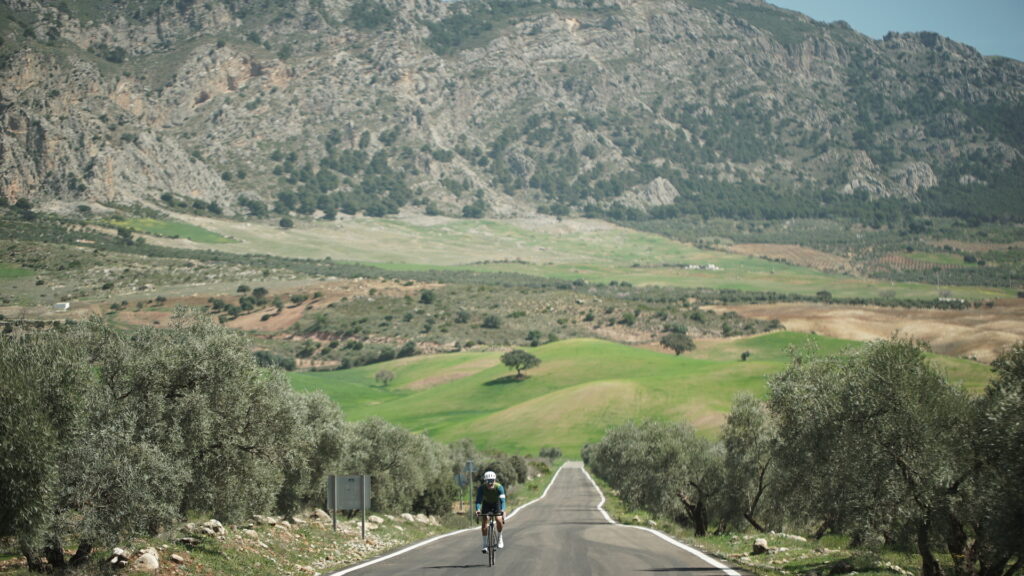
Few regions capture the diversity of cycling in Spain quite like Andalucía.
Here, the roads take you through endless olive groves, dramatic limestone mountains and whitewashed villages perched high above the valleys. But what makes a cycling holiday in Andalucía particularly special is how naturally the riding connects some of southern Spain’s greatest cultural treasures.
Córdoba is a perfect example. Its UNESCO-listed historic centre and extraordinary Mosque-Cathedral provide a spectacular starting point before the journey moves into the quieter landscapes of the Sierras Subbéticas Natural Park.
From here, cycling becomes increasingly rural. Small roads weave between olive groves and traditional villages such as Zuheros, one of Andalucía’s beautiful pueblos blancos, before continuing through the hills towards Iznájar, with its whitewashed houses overlooking the largest reservoir in Andalucía.
As you travel west, the landscape changes again.
Around Antequera, enormous limestone formations rise above a countryside shaped by agriculture and centuries of history. Further south and west, the mountains become increasingly dramatic as the roads approach the Sierra de las Nieves and eventually Ronda.
Ronda makes an extraordinary base for exploring some of Andalucía’s finest cycling. Routes lead into the Sierra de Grazalema Natural Park, connecting mountain passes with villages such as Grazalema and Setenil de las Bodegas.
For cyclists looking for a challenge, climbs such as Puerto de las Palomas and Puerto del Boyar offer beautiful mountain riding. But Andalucía doesn’t need to be about chasing elevation. Some of our favourite moments here come from the quieter roads between villages, where traffic disappears and the landscape seems to belong entirely to you.
And after the ride comes another reason we love Andalucía: long lunches, exceptional olive oil, local wines, tapas and evenings exploring towns where history is present around almost every corner.
Our favourite way to experience Andalucía
Our Bike Tour in Andalucía: Córdoba, White Villages & Ronda was designed to bring all these different sides of the region together.
Rather than basing the journey around a collection of famous climbs, we travel through Andalucía, beginning with the history and architecture of Córdoba before riding into the Subbética, through its olive-growing countryside and white villages, and eventually towards the mountains surrounding Ronda.
It’s a journey for travellers who want great cycling, but who also want to understand the place they’re riding through.
Want to know more about our Andalucía bike tours?
We’ve put together a complete guide to cycling in Andalucía covering the best regions, roads and climbs, when to visit, what to expect and our recommendations for experiencing southern Spain by bike.
Read our complete guide to cycling in Andalucía
Best for: Food lovers, experienced travellers, Atlantic scenery, mountains and distinctive local culture
Best bike: Road, e-road or e-bike
When to go: May to June and September to October
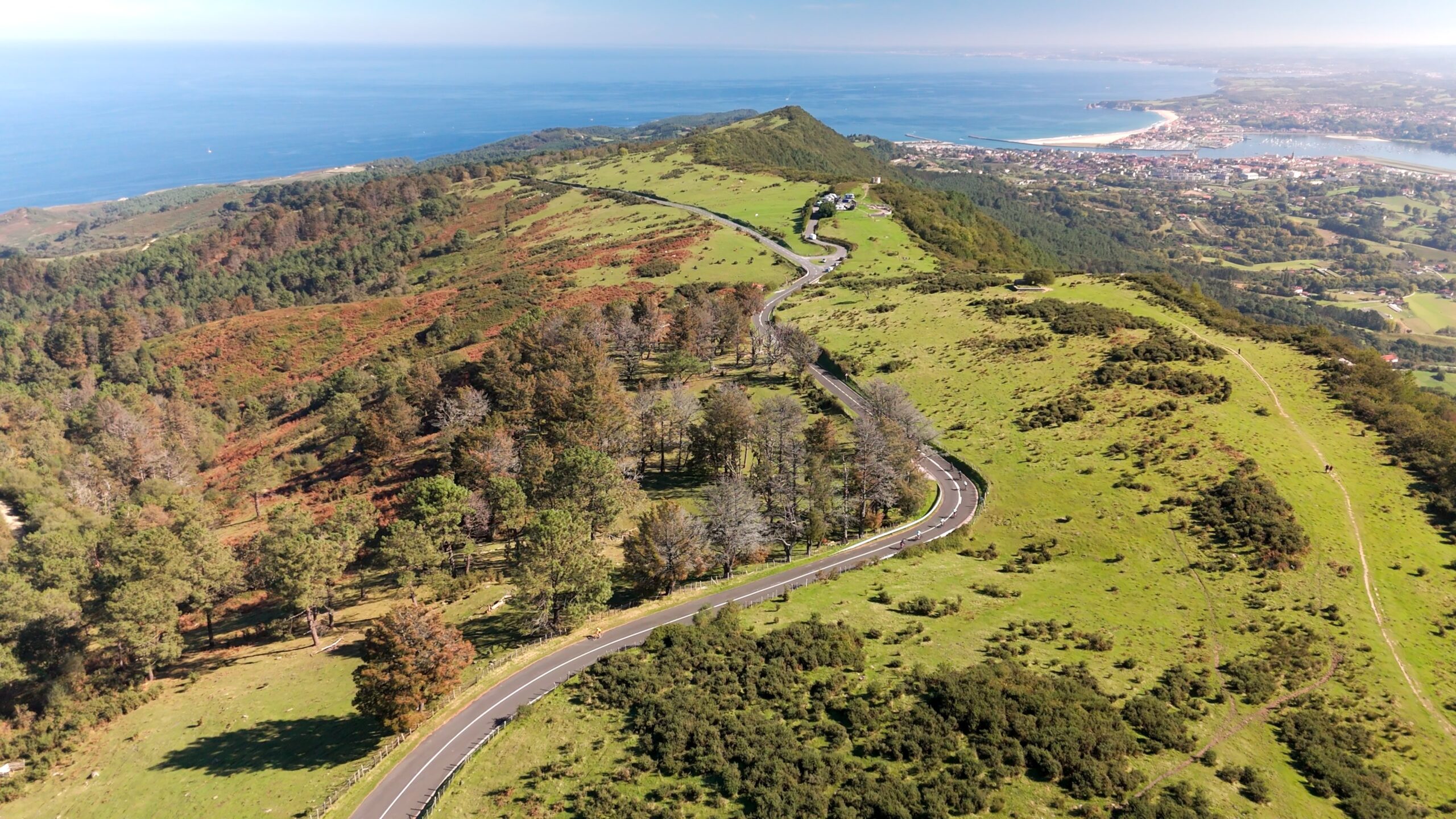
The Basque Country feels different from almost anywhere else in Spain.
Here, deep green mountains tumble towards the Atlantic, fishing villages sit between rugged cliffs and some of Europe’s most exciting cities are connected by wonderfully quiet backroads. A bike tour in the Basque Country combines serious cycling credentials with something equally important to us at Live Love Ride: an extraordinary sense of place.
This is cycling country. The Basque passion for the sport runs deep, and you’ll see it everywhere, from local riders filling the roads on weekend mornings to the crowds that gather whenever professional racing passes through the region.
But you don’t need to ride like a professional to enjoy it.
One of the great pleasures of cycling here is the contrast between the coast and the mountains.
Around Bilbao, quiet roads quickly escape the city and lead towards rolling green countryside. Further east, the Urdaibai Biosphere Reserve combines forests, wetlands, beaches and traditional villages, creating beautiful riding towards the Atlantic.
Continue towards San Sebastián and the coastline becomes increasingly dramatic. Small roads rise and fall above the Bay of Biscay, passing fishing towns and viewpoints before eventually reaching one of Europe’s great gastronomic cities.
San Sebastián alone would be reason enough to visit. After a day on the bike, wander through the Old Town stopping for pintxos, explore the restaurants and bars surrounding the harbour or simply sit beside La Concha and watch the evening settle over the bay.
Turn inland and the Basque Country reveals another personality entirely.
Mountain roads climb through forests and rural villages before eventually reaching the vineyards of Rioja Alavesa, where the green Basque landscape gives way to rows of vines beneath the dramatic Sierra de Cantabria.
It’s one of our favourite transitions in Spanish cycling.
In the space of a journey, you can experience Atlantic coastline, mountain passes, world-class gastronomy and historic wine villages such as Laguardia, with opportunities to finish a ride tasting some of Spain’s finest wines.
For stronger cyclists, the region also offers serious climbing. But much like Andalucía, we don’t think the Basque Country should be reduced to gradients and elevation. Some of its greatest rides are simply beautiful roads through landscapes that constantly change around you.
Our Basque Country Bike Tours were designed around precisely this diversity, combining the region’s Atlantic landscapes, quiet backroads, distinctive Basque culture and exceptional gastronomy into one carefully curated cycling journey.
It’s particularly suited to travellers who want their cycling holiday to feel like a genuine exploration of a region rather than simply a collection of rides.
Our ultimate guide to cycling in the Basque Country goes much deeper into the region, including Bilbao, Urdaibai, San Sebastián, the Bidasoa Valley, Rioja Alavesa and the French Basque Country, together with our favourite roads, climbs and places to experience along the way.
Read our ultimate guide to cycling in the Basque Country
Best for: Road cyclists, iconic climbs, Mediterranean scenery and world-class cycling
Best bike: Road or e-road bike
When to go: March to May and September to November
Few destinations in Europe are as closely associated with cycling as Mallorca.
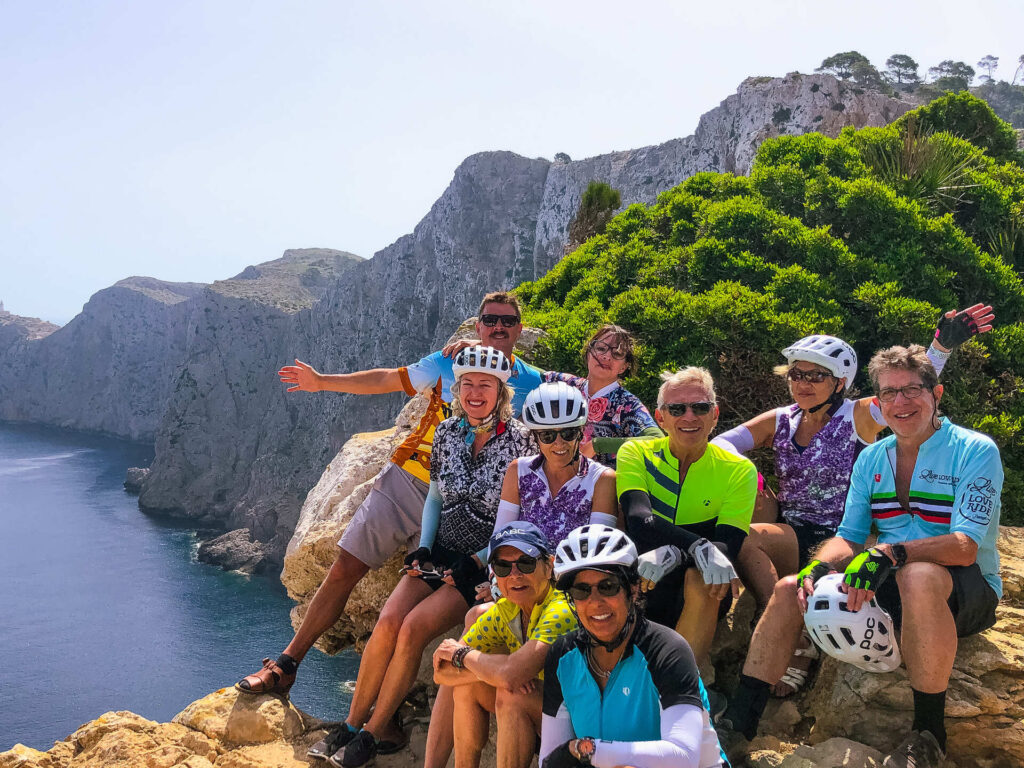
The island has become a favourite among professional teams and recreational riders alike, and it’s easy to understand why. A Mallorca bike tour combines beautifully maintained roads, dramatic mountains, Mediterranean coastline and an exceptionally long cycling season with everything you could want after the ride: great food, wine, beaches and outstanding boutique hotels.
The famous climbs deserve their reputation, but after years of riding and designing journeys here, we think Mallorca’s real strength is its variety.
The Serra de Tramuntana, a UNESCO World Heritage landscape running along Mallorca’s northwestern coast, is the heart of cycling on the island.
Sa Calobra and Coll dels Reis provide the iconic challenge. The road’s extraordinary switchbacks descend between towering limestone cliffs towards the Mediterranean before riders turn around to tackle the famous climb back out.
Further north, Cap de Formentor offers a completely different experience. The road rolls along the peninsula towards its lighthouse, with spectacular views across the Mediterranean and stops such as Mirador Es Colomer along the way. Our advice is simple: start early. Later in the day, mass tourism can transform this beautiful road, while an early morning departure gives you quieter roads, cooler temperatures and some of the best light on the island.
But some of our favourite Mallorca riding is found elsewhere in the Tramuntana.
The climb towards Lluc Monastery winds through forests and limestone mountains, while the coastal road connecting Port de Sóller, Deià and Valldemossa is one of the most beautiful we’ve ridden anywhere in Spain. Here, cycling becomes less about conquering a famous climb and more about flowing along the mountainside with the Mediterranean far below.
Leave the Tramuntana behind and Mallorca changes again.
Quiet roads around Binissalem, Santa Maria del Camí and Alaró pass through vineyards, olive groves and traditional fincas. These gentler routes are perfect for slowing the pace, visiting a local winery and discovering an island that many cyclists focused exclusively on Sa Calobra never see.
Further south, the climb to the Sanctuary of Sant Salvador above Felanitx rewards you with extraordinary views across southern Mallorca and towards the Mediterranean.
Add villages such as Pollença, Deià and Valldemossa, fresh seafood, Mallorcan wines and evenings overlooking the harbour in Port de Sóller, and you begin to understand why so many cyclists return year after year.
Our Best of Mallorca: the Signature Journey brings these different sides of the island together.
Rather than focusing exclusively on Mallorca’s famous climbs, we’ve designed the journey around the complete experience: spectacular cycling, quieter roads, Mediterranean villages, local gastronomy and handpicked hotels including Hotel Espléndido in Port de Sóller, Can Aulí Luxury Retreat in Pollença and Es Figueral Nou in the island’s peaceful interior.
It’s Mallorca as we believe it should be experienced: one exceptional ride at a time, with plenty to look forward to when you get off the bike.
Want to know more about cycling in Mallorca?
We’ve created an extensive ultimate guide to cycling in Mallorca covering the island’s best cycling routes, Sa Calobra, Cap de Formentor, the Serra de Tramuntana, wine country, Sant Salvador, when to visit, where to stay and some of our favourite places to eat and drink along the way.
Read our ultimate guide to cycling in Mallorca
Best for: Road cycling enthusiasts, cycling culture, medieval villages, gastronomy and Mediterranean scenery
Best bike: Road or e-road bike
When to go: April to June and September to October
Catalonia offers one of the most complete cycling experiences in Spain.
At its heart is Girona, a city that has become synonymous with cycling and home to professional riders from around the world. But venture beyond Girona and you’ll discover a much richer landscape: volcanic hills, medieval villages, vineyards, quiet rural roads and, eventually, the wild Mediterranean coastline of the Costa Brava.
A cycling holiday in Catalonia can therefore be whatever you want it to be. You can tackle famous training climbs, spend a morning riding between medieval villages, cross the vineyards of the Empordà or follow spectacular coastal roads overlooking the Mediterranean – you can do it all on our bike tour in Catalonia – from Girona and Empordá to the Costa Brava
Girona’s reputation among cyclists is well deserved.
Within minutes of leaving its historic centre, you can be riding on quiet country roads with an extraordinary choice of terrain in almost every direction.
For a challenge, Rocacorba is the benchmark. The long climb overlooking Banyoles has become a favourite testing ground for professional cyclists living in Girona. Closer to the city, the climb to Els Àngels offers beautiful forest roads and is easily incorporated into a longer loop through the surrounding countryside.
But some of our favourite Girona rides aren’t about famous climbs at all.
Ride north towards Banyoles, explore the volcanic landscapes around La Garrotxa, or simply follow the network of small roads connecting Catalan villages and farmland. This is where Girona’s real appeal becomes obvious: you don’t need a famous route. Pick a direction and there is usually excellent cycling waiting for you.
Head east from Girona and the landscape begins to change.
The Baix Empordà is one of our favourite places for more relaxed cycling, with peaceful roads connecting beautifully preserved medieval villages such as Pals, Peratallada and Monells.
These aren’t simply places to ride through.
Stop for coffee in a stone village square, visit a local market or take time over lunch before getting back on the bike. Nearby Púbol, home to the castle Salvador Dalí gave to Gala, also provides a fascinating introduction to the artistic heritage that runs throughout this part of Catalonia.
The Empordà wine region adds another dimension. Vineyards have been cultivated here for centuries, and the rolling terrain makes it easy to combine a morning ride with a winery visit and tasting later in the day.
It’s precisely the kind of cycling we love at Live Love Ride: beautiful roads, but with a reason to stop along the way.
Eventually, those quiet inland roads meet the Mediterranean.
The Costa Brava is dramatically different from the countryside surrounding Girona. Pine-covered hills descend towards rocky coves, fishing villages and intensely blue water, while winding coastal roads repeatedly climb above the sea before dropping back towards the shoreline.
Further north, Cadaqués and Cap de Creus reveal the wilder side of the Costa Brava. The landscape becomes increasingly exposed and dramatic as you approach the easternmost point of the Iberian Peninsula, with the Mediterranean stretching out around you.
The region’s connection with Salvador Dalí is never far away either, particularly around Cadaqués, Portlligat and Figueres, adding another cultural layer to a cycling journey that already combines mountains, countryside, wine and coast.
Rather than treating Girona simply as a base for daily training rides, we prefer to use the bicycle to travel through Catalonia.
Our cycling tours in Catalonia combine the cycling culture of Girona with the medieval villages and vineyards of the Empordà and the spectacular landscapes of the Costa Brava.
It’s a journey that constantly changes character, from morning coffee among cyclists in Girona to quiet country lanes, ancient stone villages and eventually the Mediterranean.
Our guide to cycling in Catalonia explores Girona, Banyoles, La Garrotxa, the medieval villages of the Baix Empordà, the Empordà wine region, Cadaqués and Cap de Creus in greater detail.
Read our guide to cycling in Catalonia
Best for: Wine lovers, couples, recreational cyclists and relaxed riding through vineyard landscapes
Best bike: Touring, gravel or e-bike
When to go: May to June and September to October
If Mallorca is about legendary climbs and the Basque Country about dramatic landscapes, La Rioja is about slowing down.
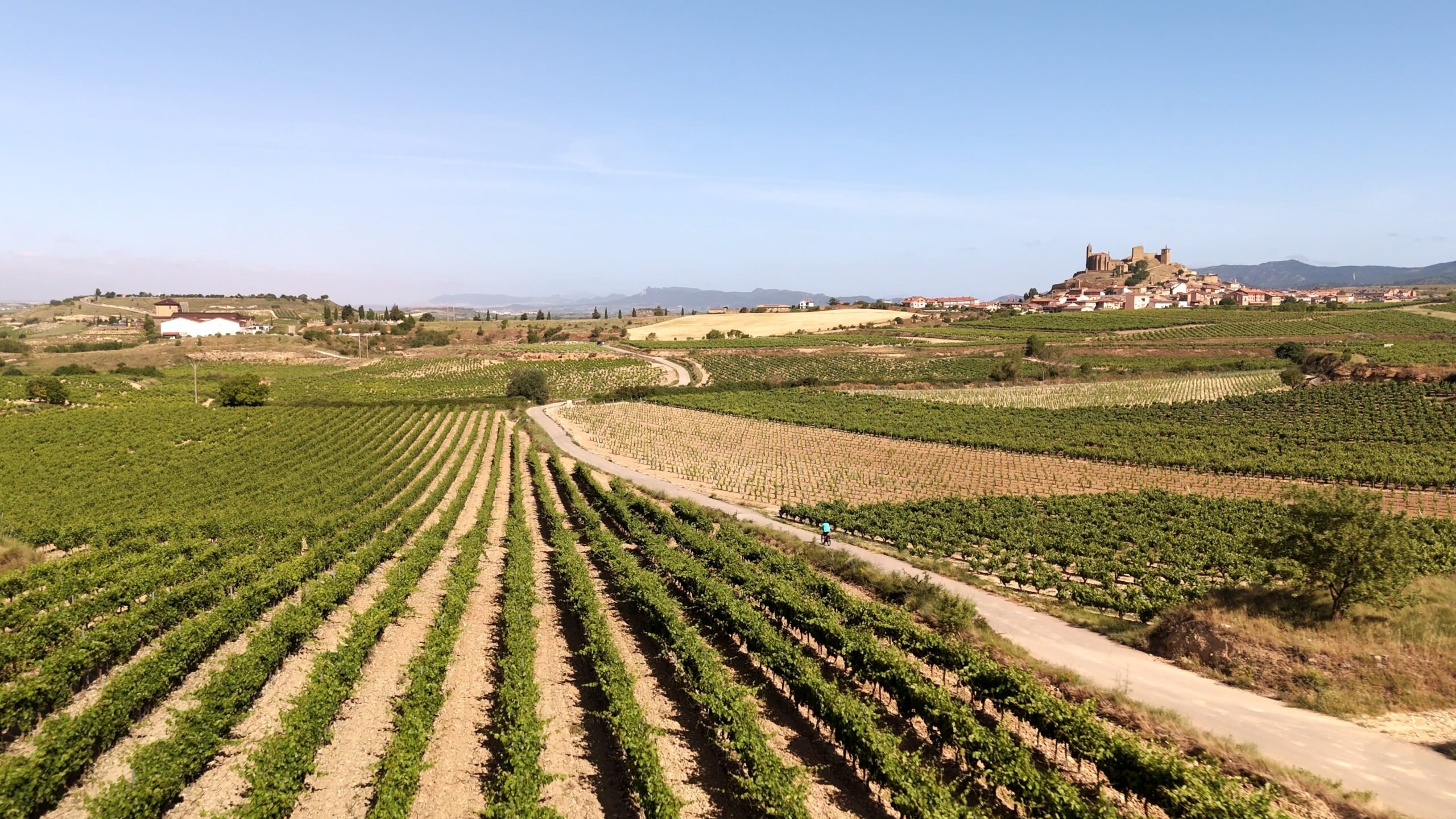
This is one of Spain’s great wine regions, where quiet roads roll between seemingly endless vineyards, medieval villages and historic wineries beneath the mountains. A cycling holiday in La Rioja isn’t about chasing famous cols or accumulating elevation. It’s about using the bicycle to explore a landscape that has been shaped by wine for centuries.
And for us, that’s precisely what makes it special.
The riding in La Rioja is wonderfully varied without needing to be extreme.
Small roads weave between vineyards and villages, climbing gently towards viewpoints before dropping back into valleys covered in vines. Traffic is generally light away from the larger towns, making this an ideal region for recreational cyclists, couples and e-bike riders who want beautiful days on the bike without turning every ride into a test of endurance.
Towns such as Haro, Briones and San Vicente de la Sonsierra provide natural stops along the way, while the surrounding countryside is dotted with wineries ranging from historic family-run cellars to some of the most architecturally ambitious bodegas in Spain.
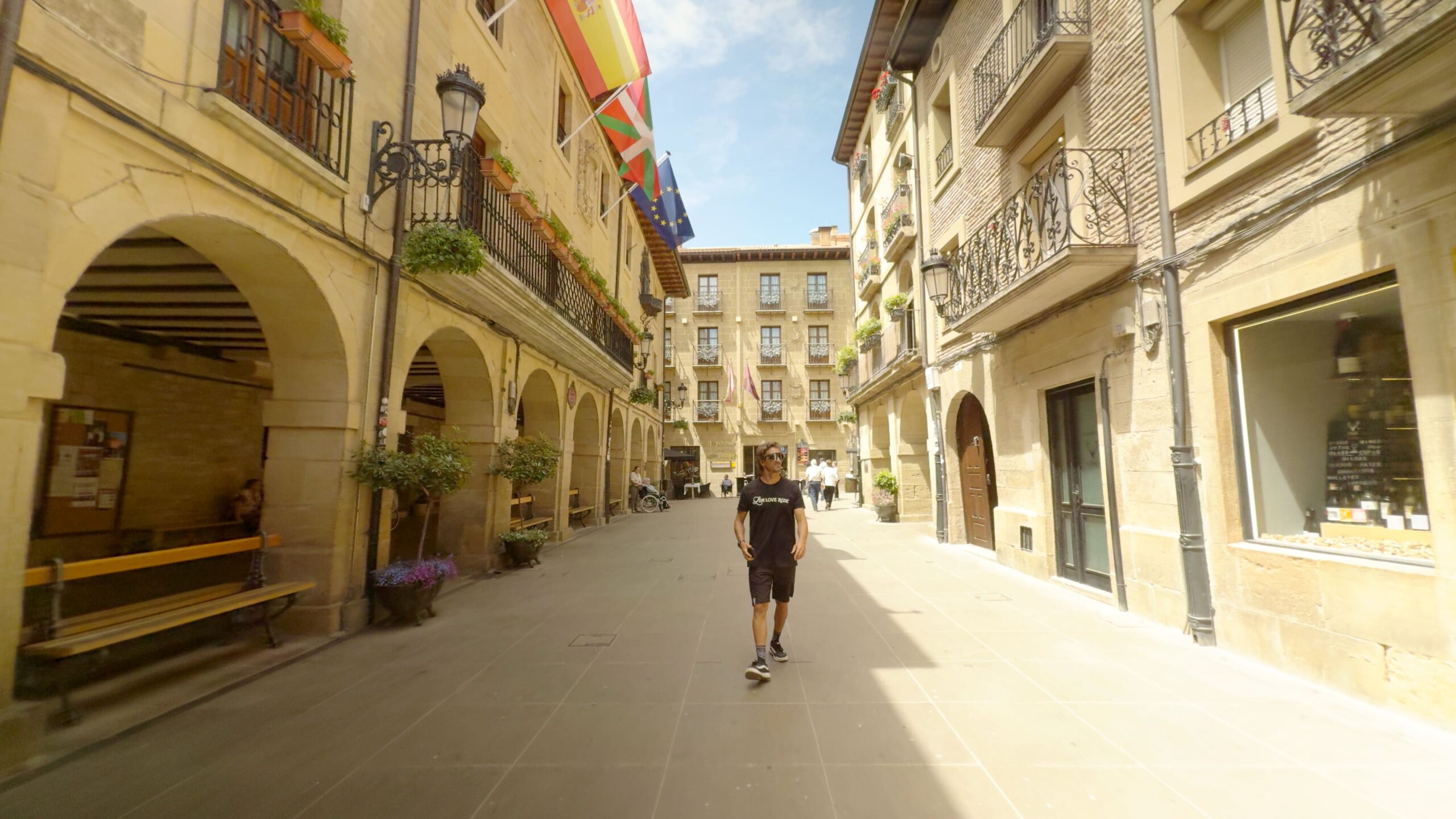
And then there’s Laguardia, sitting on a hilltop overlooking the vineyards of neighbouring Rioja Alavesa. Its medieval walls, narrow streets and underground wine cellars make it one of our favourite places to experience the culture behind the landscape you’re riding through.
La Rioja is perhaps the clearest expression of our belief that the bicycle should be a way to discover a destination rather than the destination itself.
A typical day might begin riding through vineyards while the morning is still cool, stop in a medieval village for coffee and continue towards a winery for a tasting or lunch.
Here, getting off the bike is part of the experience.
The region is home to internationally recognised producers as well as smaller wineries where generations of the same family continue to make wine. Exploring both gives you a much deeper understanding of Rioja than simply ordering a bottle at dinner.
And the gastronomy deserves just as much attention. Rioja’s wines are accompanied by excellent local produce, traditional tapas and the kind of long lunches that make you very happy you chose to travel at cycling pace.
There’s more to La Rioja than wine.
Head towards the foothills and the terrain becomes increasingly dramatic, with the Sierra de Cantabria forming an imposing backdrop to the vineyards. Routes can be made significantly more challenging for riders who want climbing, while gentler alternatives remain available through the valleys below.
That flexibility makes La Rioja bike tours particularly good for groups of mixed abilities, especially with e-bikes available.
It’s also beautifully positioned between northern Spain’s Atlantic landscapes and the drier interior, giving the region a character that feels distinctly different from everywhere else in this guide.
Our Cycling Rioja: Vineyards, Villages & Mountains journey was designed around exactly this combination.
Rather than treating the wineries as attractions added around the cycling, the vineyards, villages, gastronomy and wines are part of the journey itself. We ride through the landscapes that produce the wines, meet the people behind them and still enjoy beautiful cycling every day.
For travellers who care as much about what happens between and after the rides as they do about the cycling itself, La Rioja is difficult to beat.
Explore our La Rioja bike tours to learn more about cycling through one of Spain’s great wine regions and discover the journeys we’ve designed there.
Discover cycling in La Rioja – the ultimate guide
Best for: Adventure seekers, history lovers, cultural immersion and cyclists looking for a journey with purpose
Best bike: Gravel, mountain or e-bike
When to go: May to June and September to October
The Camino de Santiago is unlike any other cycling experience in Spain.
Here, the road itself is part of the story. For more than a thousand years, pilgrims have travelled towards Santiago de Compostela from across Europe, creating a network of routes that passes through historic towns, tiny villages, vineyards, forests and some of northern Spain’s most beautiful countryside.
Following the Camino de Santiago by bike allows you to experience that history while covering enough distance each day to watch the landscape and culture continually change around you.
This isn’t simply a bike tour with Santiago at the finish.
It’s a journey towards it.
The Camino Francés, or French Way, is the most famous of the Camino routes and provides an extraordinary cross-section of northern Spain.
Depending on where you begin, the route takes you through landscapes that change dramatically as you travel west. Mountain terrain gives way to vineyards, open countryside, medieval towns and eventually the green hills and forests of Galicia.
Along the way, the yellow arrows and scallop-shell symbols become constant companions.
You’ll share cafés and village squares with walkers from around the world, pass Romanesque churches and centuries-old bridges and ride through communities whose histories have been shaped by the Camino itself.
That shared sense of purpose is difficult to describe until you’ve experienced it.
There are certainly challenging days on the Camino, but we don’t think speed or performance should define this journey.
Stop.
Walk into the churches.
Have coffee with pilgrims you’ve been passing all morning.
Try the food of each region.
Collect stamps in your pilgrim credential.
The cultural experience is as important as the riding.
And as you approach Galicia, food becomes another highlight of the journey, from local cheeses and seafood to pulpo a feira, one of Galicia’s most emblematic dishes.
Then, eventually, the towers of the Cathedral of Santiago appear.
Arriving at Praza do Obradoiro by bicycle after days travelling west is one of those moments that stays with you.
Our favourite way to experience the Camino
Our Camino de Santiago bike tours are designed around the journey rather than simply completing kilometres.
We take care of the logistics so that riders can concentrate on experiencing the landscapes, villages, gastronomy and history that make the Camino unique, with carefully planned stages and the support needed to enjoy the route at your own pace.
For travellers looking for something more meaningful than a traditional cycling holiday, the Camino offers an experience unlike anywhere else in Spain.
Explore our Camino de Santiago bike tours and discover the different ways to experience one of Europe’s great journeys by bicycle.
Most popular tours in the Camino de Santiago:
Bike tour from Léon to Santiago, by the French Camino
Bike tour from Porto to Santiago de Compostela by the Portuguese Camino
Planning a cycling holiday in Spain starts with one simple question: what kind of experience do you want to have?
Spain can offer everything from challenging mountain rides to relaxed journeys through vineyards and historic villages. The distances, terrain and style of cycling can therefore vary enormously between destinations.
At Live Love Ride, we recommend thinking beyond kilometres and elevation when choosing your trip. Consider what you’d like to experience when you’re not riding too: food and wine, historic towns, Mediterranean beaches, remote countryside or perhaps the unique atmosphere of the Camino de Santiago.
Both can be exceptional ways to explore Spain, but they offer very different experiences.
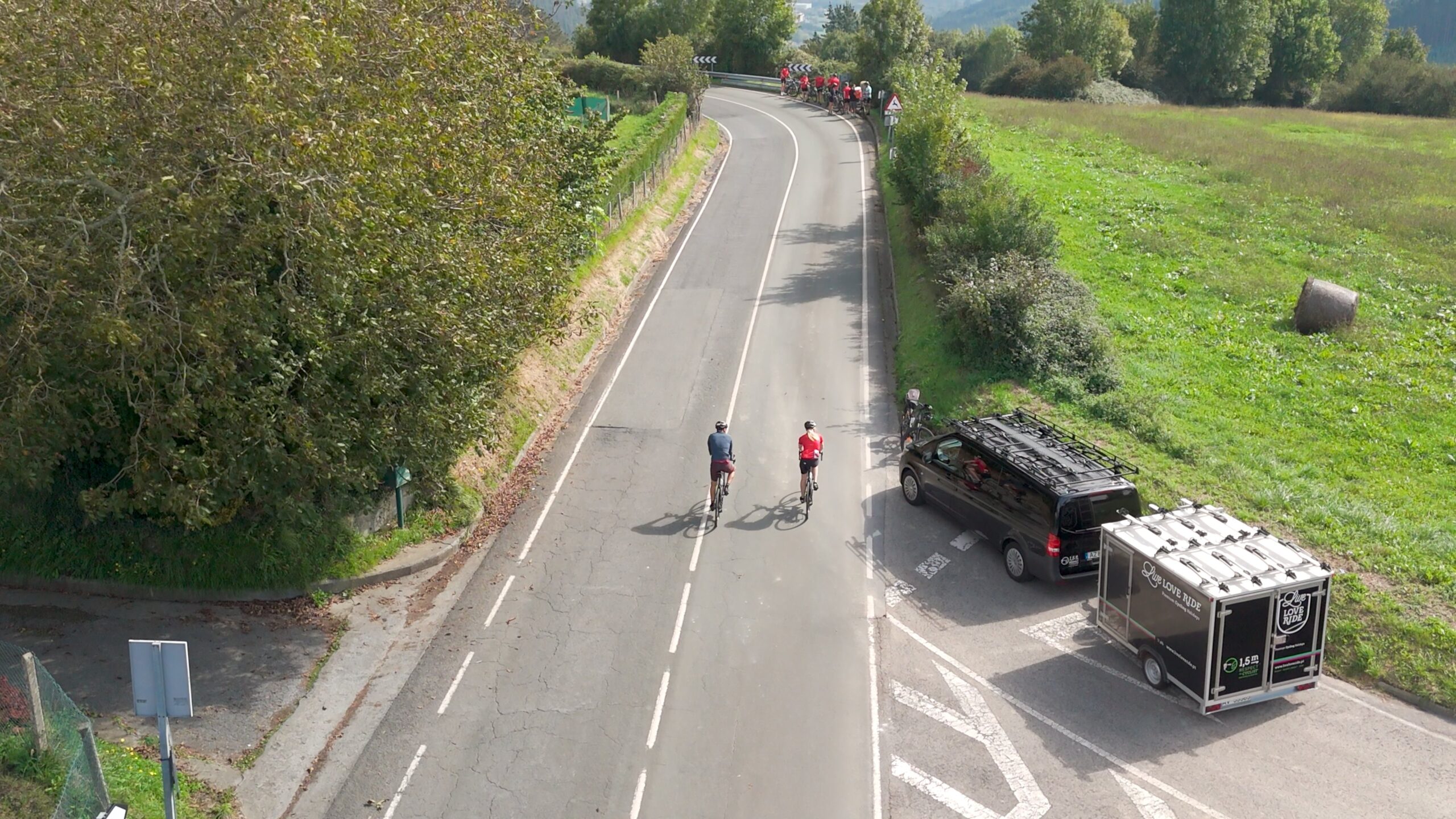
A guided bike tour in Spain is ideal if you want everything taken care of. Your guides manage the route, bikes and daily logistics while sharing their knowledge of the region, from the history and culture to the restaurants, wineries and places you might otherwise ride straight past. Support vehicles also provide flexibility, particularly on longer or more challenging days.
A self-guided bike tour offers greater independence. You ride at your own pace using detailed navigation, while accommodation, luggage transfers and the essential logistics are organised for you. It’s a great choice for experienced independent travellers who enjoy having more freedom during the day.
At Live Love Ride, we offer both options across selected destinations, allowing you to choose the style of journey that suits you best.
For most regions, we recommend around a week.
That gives you enough time to experience the destination rather than simply ride through it. It also allows for shorter days, cultural visits, wine tastings, long lunches and time to enjoy the exceptional hotels and towns along the way.
If you’re travelling from North America or further abroad, we’d also recommend adding a few days before or after your cycling tour. Spain deserves more than a hurried visit.
Galicia offers a profound cycling experience along the famed Camino de Santiago, including the scenic Portuguese route from Porto. This pilgrimage path winds through lush landscapes and quaint villages, ending at the majestic Santiago de Compostela cathedral. Cyclists can choose from several routes, such as the iconic Camino Francés or the verdant Portuguese way, each providing a unique blend of spiritual, historical, and physical exploration set against the backdrop of Galicia’s stunning vistas.
Best time to visit: March to June; September to October – If you are looking to ride in July or August, we advise the Portuguese Camino, as it is close to the coast, making for a more moderate temperature.
Most popular tours in the Camino de Santiago:
Bike tour from Léon to Santiago, by the French Camino
Bike tour from Porto to Santiago de Compostela by the Portuguese Camino
We’ve been designing cycling journeys in Portugal and Spain for more than a decade, and one thing we’ve learned is that a great bike tour is about much more than finding beautiful roads.
It’s about knowing which road to take, where to stop, which hotel is worth staying an extra night in and where a simple lunch can become one of the memories of the trip.
Our journeys are designed by people who ride and know these regions. We combine carefully selected routes with premium Specialized bikes, handpicked hotels, authentic local gastronomy and experienced guides and support, allowing you to concentrate on experiencing Spain rather than managing the logistics.
The right bike for your cycling holiday can completely change your experience
Our fleet includes Specialized road bikes, e-road bikes, gravel bikes and premium e-bikes, allowing us to match the bicycle to both the terrain and the rider.
This is particularly important for couples and groups with different fitness levels. An e-bike or e-road bike can allow everyone to share the same journey without requiring everyone to ride at exactly the same pace.
The famous roads are usually easy to find.
The tiny restaurant hidden in a village, the quieter alternative to a busy road, the viewpoint worth making a detour for or the family winery where you should actually stop are harder to discover.
That’s where local knowledge matters.
Our guides don’t simply lead rides. They introduce you to the places you’re travelling through, sharing the history, food, wine and culture that make Andalucía different from Mallorca, the Basque Country different from La Rioja and every journey distinctly its own.
Not every cyclist wants the same experience.
Some guests want challenging days in the mountains. Others would rather stop for coffee, take photographs and enjoy a long lunch. Many couples simply want to ride together even though one person cycles considerably more than the other.
Our journeys are designed with that flexibility in mind.
Whether you choose a guided or self-guided experience, the goal remains the same: to make the bicycle the best possible way to discover Spain.
Ultimately, that’s what Live Love Ride is about.
We love great cycling. But we also believe the moments between the rides matter just as much: the hotel overlooking the Mediterranean, the wine tasting in La Rioja, the pintxos bar in San Sebastián, the village square in Andalucía and the stories shared over dinner at the end of the day.
We don’t simply want to show you where to cycle in Spain. We want to show you Spain by bike.
Yes. Spain is one of Europe’s most diverse cycling destinations, with everything from Mediterranean coastal roads and major mountain climbs to vineyards, quiet countryside and historic pilgrimage routes. Regions such as Mallorca, Andalucía, the Basque Country, Catalonia and La Rioja offer very different cycling experiences, making Spain suitable for both experienced cyclists and recreational riders.
It depends on what you’re looking for. Mallorca is ideal for iconic road cycling and climbing, Andalucía combines cycling with history and white villages, the Basque Country is exceptional for food and varied terrain, Catalonia and Girona offer a strong cycling culture and Mediterranean landscapes, La Rioja is perfect for wine lovers and more relaxed riding, while the Camino de Santiago offers a journey with a unique sense of purpose.
There is no single best season because Spain’s climate varies considerably between regions. Spring and autumn are generally excellent throughout much of the country. Andalucía and Mallorca are particularly attractive outside the hottest summer months, while northern destinations such as the Basque Country, La Rioja and the Camino de Santiago are excellent from late spring through early autumn.
No. Spain offers routes for almost every ability level. While experienced riders can tackle challenging mountain roads and famous climbs, there are also rolling vineyard routes, quiet country roads and gentler coastal itineraries. E-bikes and e-road bikes also make it possible for couples or groups with different fitness levels to enjoy the same journey together.
You certainly can, but it isn’t necessary. Live Love Ride provides a range of premium Specialized bikes, including road bikes, e-road bikes, gravel bikes and e-bikes depending on the destination and tour, saving you the inconvenience of travelling internationally with your own bicycle.
Absolutely. Modern premium e-bikes are particularly well suited to Spain because they allow riders to enjoy hilly and mountainous regions without removing the pleasure of cycling. They’re also an excellent solution for couples and groups where riders have different levels of fitness or experience.
It depends on how you like to travel. Guided tours provide local guides, greater support and a more immersive experience, while self-guided tours offer greater independence and the freedom to ride at your own pace. We offer both formats on selected Live Love Ride journeys in Spain.
For most destinations, around seven days provides a good balance. This gives you enough time to explore a region by bike while still enjoying its villages, restaurants, wineries, cultural sites and hotels. Longer journeys such as the Camino de Santiago may require additional days depending on the route and starting point.
Spain has a strong cycling culture, and many of its best cycling regions offer excellent road surfaces and extensive networks of quiet secondary roads. As anywhere, riders should follow local traffic laws, use appropriate equipment and take extra care on busier roads and during peak tourism periods.
Bring your usual cycling clothing, shoes, helmet and any personal equipment you prefer to ride with. Layers are important, particularly in mountainous regions where conditions can change during the day. For a multi-day cycling holiday, we also recommend comfortable casual clothing for evenings, walking shoes and swimwear, especially in Mediterranean destinations.
Yes, and this is increasingly common on our tours. Route flexibility and the availability of premium e-bikes and e-road bikes mean couples can experience the same journey together even when one person is a stronger or more experienced cyclist.
Live Love Ride has been designing premium cycling journeys across Spain and Portugal for more than a decade. We combine carefully selected cycling routes with premium Specialized bikes, handpicked hotels, local gastronomy and experienced support, with one goal: to help you experience Spain by bike, rather than simply cycle through it.
Spain is not one cycling destination. It is many.
The Mediterranean roads of Mallorca, the white villages of Andalucía, the green mountains and extraordinary gastronomy of the Basque Country, the cycling culture of Girona, the vineyards of La Rioja and the ancient paths of the Camino de Santiago each offer a completely different reason to get on a bike.
What they have in common is the opportunity to experience Spain slowly, travelling through landscapes rather than simply passing them by.
At Live Love Ride, that has always been our philosophy. Great roads matter, but so do the village where you stop for coffee, the winery you discover along the way, the hotel waiting at the end of the ride and the people who help you understand the place you’re travelling through.
Whether you’re looking for legendary climbs, relaxed e-bike riding, food and wine or simply your next great adventure, we’ll help you find the journey that fits you.
You can also contact one of our tour consultants in the link below:
Please select a valid form