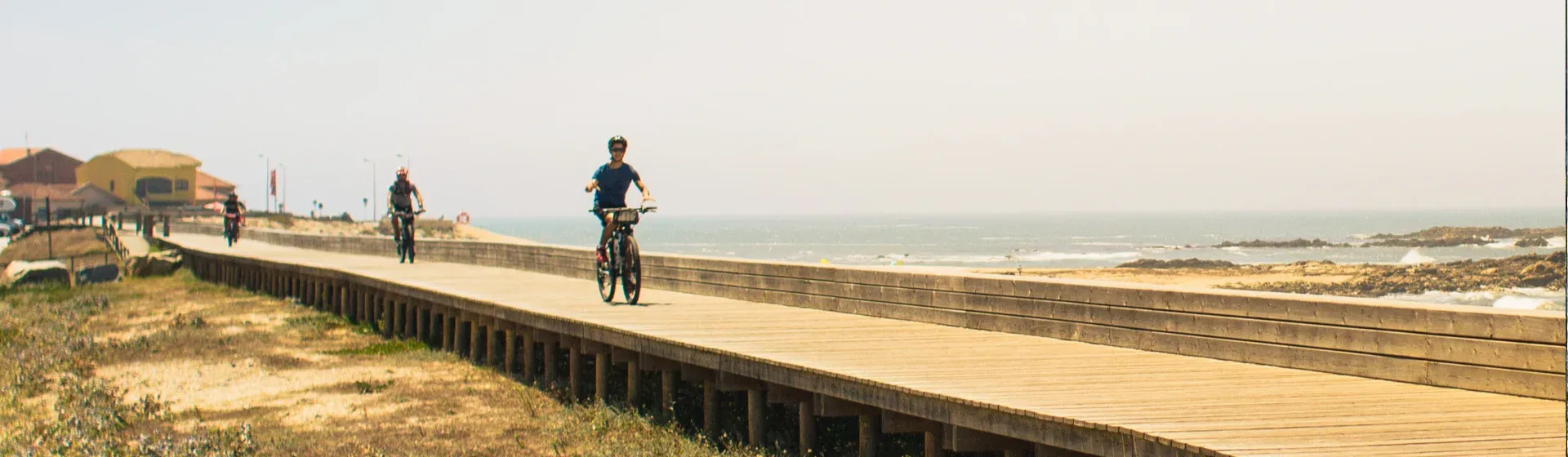
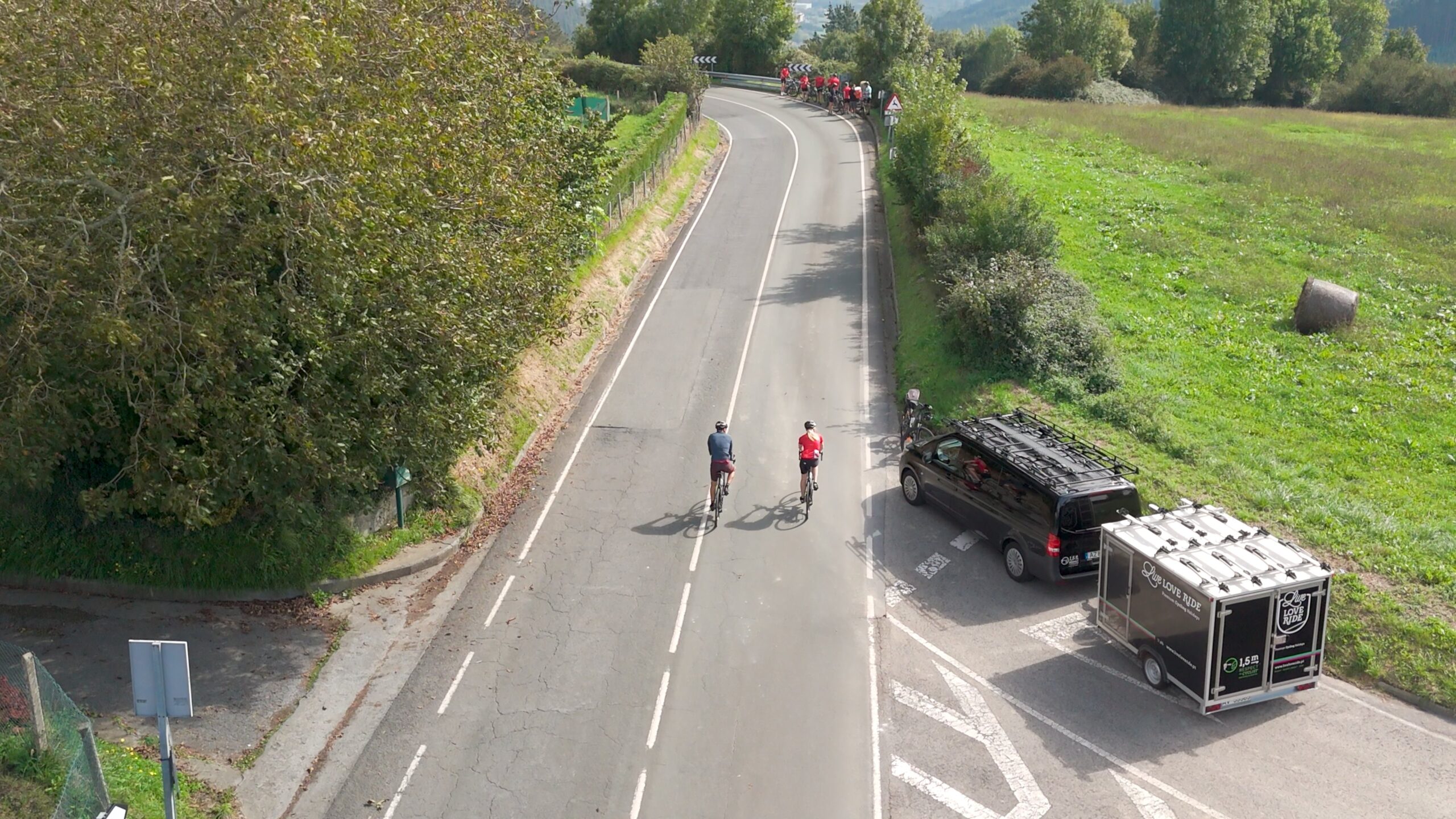
Ride one of Europe’s great journeys on two wheels. Our Camino de Santiago bike tours follow the legendary French Way through northern Spain, combining historic pilgrim trails, quiet roads and spectacular landscapes on the journey towards Santiago de Compostela.
Starting in León, experience some of the most memorable sections of the Camino Francés, from Astorga and Cruz de Ferro to the vineyards of El Bierzo, O Cebreiro and the green hills of Galicia. Choose a gravel, mountain or e-bike and experience the Camino at your own pace, with our local team taking care of the details along the way.
Ride one of Europe’s great journeys on two wheels. Our Camino de Santiago bike tours follow the legendary French Way through northern Spain, combining historic pilgrim trails, quiet roads and spectacular landscapes on the journey towards Santiago de Compostela.
Starting in León, experience some of the most memorable sections of the Camino Francés, from Astorga and Cruz de Ferro to the vineyards of El Bierzo, O Cebreiro and the green hills of Galicia. Choose a gravel, mountain or e-bike and experience the Camino at your own pace, with our local team taking care of the details along the way.

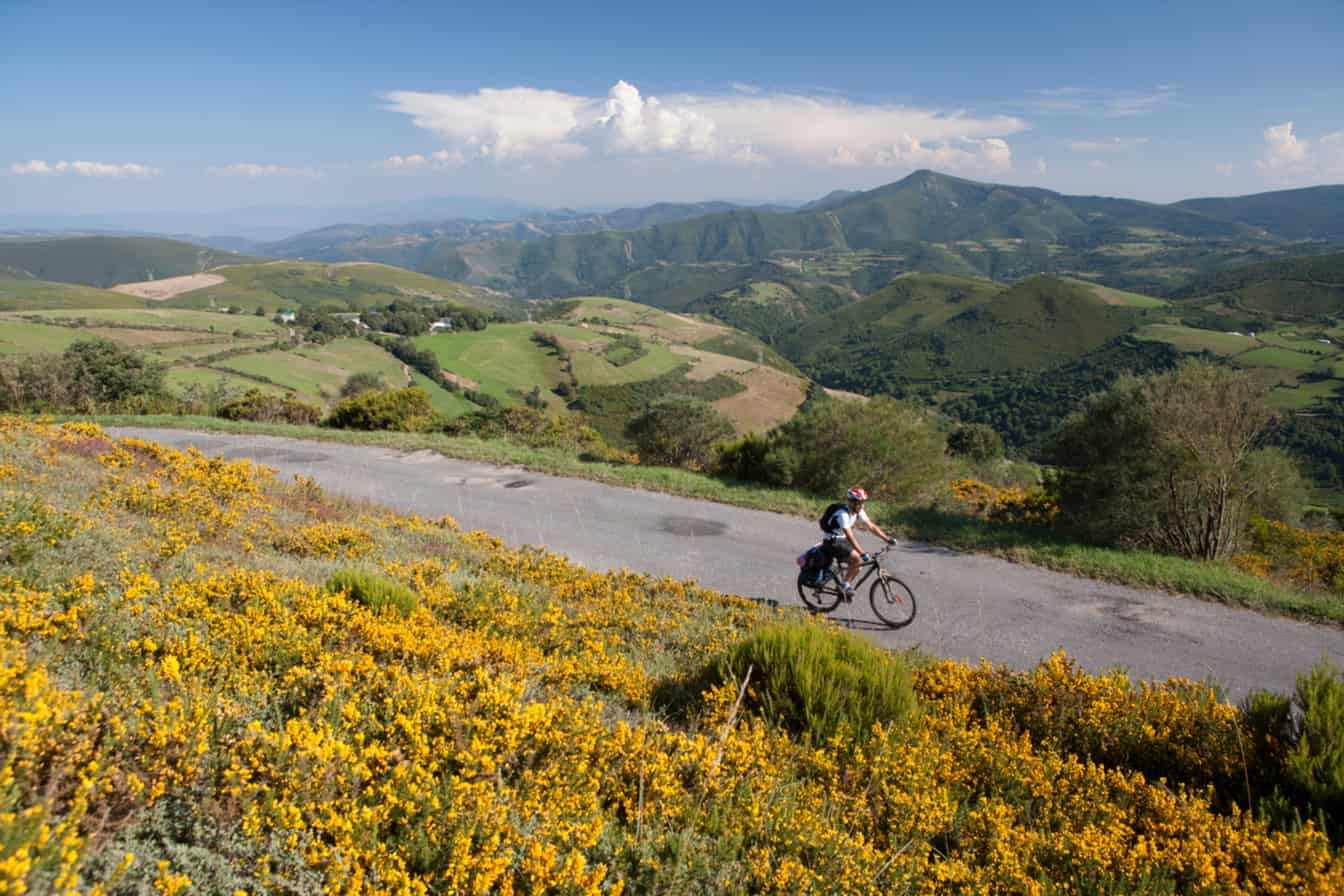
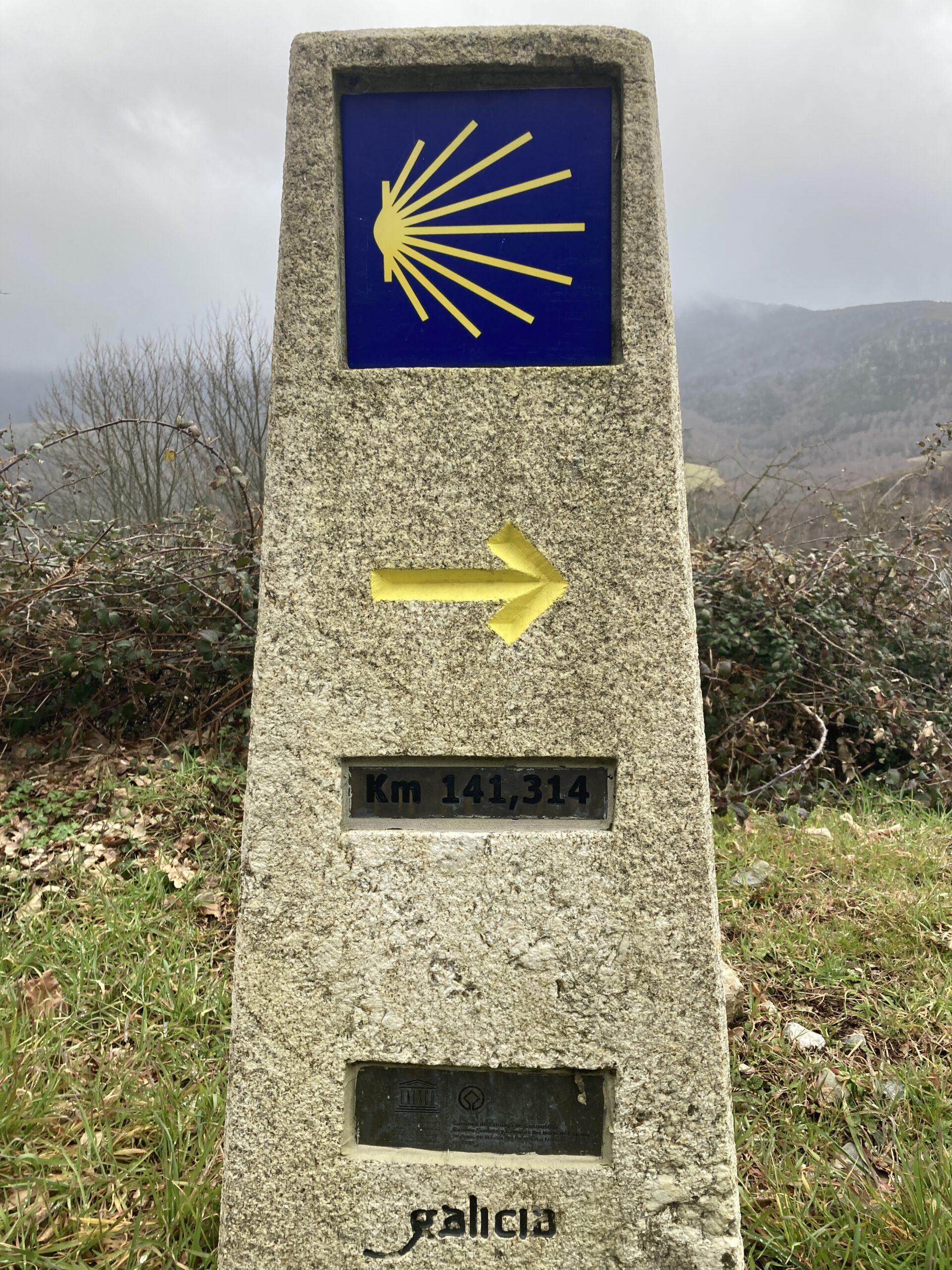
The Camino de Santiago is much more than a cycling route. It is one of Europe’s great journeys, travelled for centuries by people making their way towards Santiago de Compostela.
By bike, you experience that journey on a different scale.
Over consecutive days, landscapes, villages and regions gradually change around you. Historic cities give way to rural trails, vineyards and mountain landscapes. Castilla y León eventually becomes Galicia, the number of pilgrims around you grows, and Santiago gets a little closer with every ride.
For cyclists, the Camino offers something that few conventional cycling destinations can reproduce: a real sense of travelling somewhere.
You are not riding loops from the same hotel or collecting famous climbs. You are moving west each day, following a route with more than a thousand years of history towards one unmistakable destination.
Our current Camino de Santiago bike tour follows the French Way from León, but the Camino is much larger than any single itinerary. Different routes cross Spain towards Santiago, each offering its own landscapes, history and style of riding.
The Camino Francés, or French Way, is the classic route to Santiago and the one most closely associated with the history and culture of the pilgrimage.
For cyclists, it also offers extraordinary variety.
Starting further east can turn the Camino into a major crossing of northern Spain, passing through Navarra, La Rioja, Burgos and the Meseta before reaching León. Starting in León creates a shorter journey that still includes some of the French Way’s most memorable landscapes.
From León, the route passes through Astorga and the Maragatería, climbs into the mountains towards Cruz de Ferro, descends into the vineyards of El Bierzo, crosses into Galicia at O Cebreiro and finally continues through the green Galician countryside towards Santiago.
It is a route where the cycling and the journey complement each other.
There are climbs to work for, gravel and rural tracks to enjoy, quiet roads, historic villages and long stretches where the pleasure simply comes from moving through the landscape.
But the kilometres are only part of it.
You stop for coffee beside walkers you’ve already seen earlier in the journey. You collect stamps in your Pilgrim’s Credential. You eat differently as you move from León to El Bierzo and Galicia. And as the Camino routes converge towards Santiago, the sense of sharing the journey with people from around the world becomes increasingly noticeable.

The traditional Camino was not designed for bicycles.
That’s important.
Some sections of the pilgrim trail are fantastic to ride. Others are rocky, steep, narrow or simply more enjoyable when replaced with a nearby gravel track or quiet secondary road.
We don’t believe cycling the Camino means blindly following every yellow arrow.
Our routes are designed around the cyclist, the bicycle and the experience we want to create. We preserve the places, landscapes and character that make the Camino special while choosing cycling alternatives where they create a safer or more enjoyable ride.
That also allows us to adapt the Camino to different bicycles.
A mountain bike gives you maximum versatility on rougher terrain. A gravel bike creates a faster and more dynamic experience for confident riders. An e-bike makes the climbs and consecutive riding days accessible to a much wider range of cyclists.
The goal isn’t to ride the most difficult possible version of the Camino.
It’s to create the best possible Camino by bike.
There is much more to cycling towards Santiago than the French Way from León.
You can begin near the Pyrenees and ride a much larger section of the Camino Francés, approach Santiago along the Northern Way from the Basque Country, or travel north from Portugal on the Portuguese Camino.
We’ve put everything we’ve learned about the different routes, starting points, bikes, terrain, seasons, Credencial and Compostela into our complete guide to cycling the Camino de Santiago.
Read our complete guide to cycling the Camino de Santiago
There is no single right way to cycle the Camino de Santiago.
Some cyclists want the freedom to ride independently, stop whenever something catches their attention and experience the Camino at their own pace. Others prefer having a guide alongside them, sharing local knowledge and taking care of the details throughout the journey.
We design both guided bike tours in Spain and self-guided bike tours in Spain, with the same principle behind each: the route, bike and logistics should be designed specifically for cyclists.
A self-guided bike tour on the Camino gives you the independence of travelling on your own while removing much of the work involved in organising a multi-day cycling journey.
We take care of the route planning, accommodation, bike setup and luggage logistics, while you navigate each day’s ride using our detailed routes and navigation tools.
You decide when to start in the morning, where to stop for coffee and how long to spend exploring a village along the way.
For many cyclists, that independence fits the Camino perfectly. There is a destination waiting at the end of each day, but how you experience everything in between is largely up to you.

A guided bike tour adds another layer to the Camino journey.
Rather than simply navigating between destinations, you have local support from someone who understands the route, the terrain and the places you’re passing through.
Our guides can help manage the riding, make route decisions when conditions change and introduce you to the history, food and culture that make each part of the Camino different.
That local knowledge becomes particularly valuable on a journey like this. The best Camino experience isn’t always found by taking the shortest route or following every yellow arrow. Sometimes it’s knowing which trail is worth riding, where to stop for lunch or when a nearby road will make the day considerably more enjoyable.
Whichever way you choose to travel, a Camino bike tour involves more than putting a route onto a GPS.
Your bike needs to suit the terrain. Your luggage needs to reach the next accommodation. Transfers need to work. Routes need to be adapted to bicycles, and support needs to be available when something doesn’t go according to plan.
We take care of those details so that your daily routine can remain wonderfully simple:
Wake up. Have breakfast. Get on your bike. Ride towards Santiago.
Cycling the Camino de Santiago is relatively simple in concept: get on your bike and keep heading towards Santiago.
Creating a great Camino cycling tour takes considerably more work.
For more than a decade, our team has been designing and operating cycling journeys in Portugal and Spain. We combine local knowledge, carefully designed routes, quality bikes and on-the-ground support to make the logistics disappear into the background.
That leaves you free to concentrate on the reason you came: riding the Camino and experiencing everything that happens along the way.
We know that the route followed by walkers isn’t always the route that creates the best experience on a bicycle.
Our Camino itineraries combine the character and important landmarks of the traditional pilgrimage with routes selected specifically for cyclists. That means using great sections of the original Camino when they work well by bike, and choosing better alternatives when the walking trail becomes unnecessarily technical, crowded or unsuitable for the type of bicycle you’re riding.
It also means knowing the details that don’t necessarily appear on a map: where a surface changes, where it’s worth stopping, which sections deserve more time and how to adapt the ride to different types of cyclists.
The right bicycle can completely change your experience of the Camino.
Our fleet includes gravel bikes, mountain bikes and e-bikes, allowing us to match the bike and route to the way you want to ride.
Experienced cyclists might prefer the speed and responsiveness of a gravel bike. Riders wanting greater stability on mixed terrain may choose a mountain bike, while an e-bike can make the Camino accessible to couples, friends and groups with different fitness levels.
Before you start, we’ll make sure your bike is properly prepared and fitted so that it feels like your bike for the journey ahead.
A point-to-point cycling journey involves a lot of moving parts.
Bikes, luggage, accommodation, navigation, transfers and daily support all need to work together while you continue travelling towards Santiago.
We take care of those logistics behind the scenes, including luggage transfers between hotels, bike preparation, route navigation and local support throughout your journey.
If something unexpected happens, you’re not trying to solve it alone from the side of a trail in northern Spain. Our team is there to help keep the journey moving.
The Camino has a long tradition of simple pilgrim accommodation, but experiencing the Camino doesn’t mean you have to sleep in a dormitory after every ride.
We select comfortable hotels and characterful local properties where you can recover properly after a day on the bike, while still feeling connected to the places you’re travelling through.
The same philosophy applies to food.
From tapas in León and cocido maragato around Astorga to Mencía wines in El Bierzo and Galician food as you approach Santiago, we want the experience off the bike to reflect the regions you’re riding through.
We believe the best support is often the kind you barely notice.
Your luggage appears at the next hotel. Your bike works. Your route is ready. Someone is available when you need help.
But the experience still feels like yours.
You still have to pedal the kilometres, climb the hills, decide when to stop for coffee and eventually make your own way into Santiago de Compostela.
We take care of what happens around the ride so that the Camino itself remains the adventure.

The difficulty depends on the Camino route, the stages you choose and the type of bike you’re riding.
On the French Way, expect a mixture of rolling terrain, longer climbs and consecutive days in the saddle. Sections around Cruz de Ferro, O Cebreiro and Galicia can be demanding, but you don’t need to be an elite cyclist to enjoy the Camino.
Being comfortable riding for several hours on consecutive days is more important than being particularly fast.
We can also adapt the experience to different riders through route selection and bike choice. For recreational cyclists or groups with different fitness levels, an e-bike can make a significant difference.
Yes, provided you choose the right itinerary and bike.
We wouldn’t recommend that a beginner simply download the traditional walking route and attempt to ride every trail. Some sections of the Camino are considerably more technical than others, and a cycling-optimised route can preserve the experience while avoiding unnecessarily difficult terrain.
For less experienced cyclists, we’d also strongly consider an e-bike. Electric assistance makes the longer climbs and consecutive riding days much more manageable while still allowing you to experience the journey by bicycle.
There isn’t one perfect bike for every Camino.
A mountain bike gives you maximum versatility on rougher trails. A gravel bike is faster and more responsive for confident riders when the route is adapted appropriately, while an e-bike is an excellent choice for recreational cyclists or anyone concerned about the climbing.
We help match the bike and route to your riding experience rather than expecting every cyclist to tackle the Camino in exactly the same way.
For most Camino bike tours in northern Spain, we particularly like May, June and September.
Spring brings green landscapes and generally comfortable cycling temperatures, while September offers excellent riding conditions without the peak summer heat.
July and August are also possible, but some sections can be hot and the Camino becomes busier as you approach Santiago. Early autumn can be excellent, although weather becomes increasingly unpredictable later in the season.
Whatever month you choose, remember that northern Spain and Galicia can experience rapidly changing weather, particularly in the mountains.
That depends entirely on where you choose to begin.
Starting near the Pyrenees turns the French Way into a major cycling journey across northern Spain, while starting further west allows you to experience the Camino within a shorter holiday.
Our current French Way bike tour from León to Santiago takes eight days and seven nights, with daily rides averaging approximately 50 to 60 km.
The objective isn’t to cover the maximum possible distance each day. We prefer stages that leave enough time to stop, explore and actually experience the places you’re riding through.
No.
On our Camino cycling tours, luggage transfers can be organised between accommodations so that you only need to carry what you require during the day’s ride.
That makes a significant difference on a multi-day journey, particularly when the route reaches the mountains and hillier terrain of Galicia.
You ride the bike. We make sure your luggage keeps travelling towards Santiago too.
Depending on the itinerary, Camino journeys can be experienced in different formats.
A self-guided bike tour gives you greater independence, with your routes, accommodation, bike and logistics organised while you ride at your own pace.
A guided bike tour adds greater local support and knowledge throughout the journey.
Both can be fantastic ways to experience the Camino. The right choice depends on how independently you like to travel and how much support you want along the way.
Yes. Cyclists seeking the traditional Compostela must complete at least the final 200 km to Santiago and meet the other pilgrimage and credential requirements established by the Cathedral of Santiago.
You’ll use a Credencial del Peregrino to collect stamps as you travel towards Santiago and present it when you finish your Camino.
Because requirements can change, we recommend checking the current rules directly with the official Pilgrim’s Office in Santiago de Compostela before travelling.
No, and in some places we don’t think they should. The traditional Camino was primarily developed for people travelling on foot. Some sections are wonderful to ride, while others can be rocky, steep, narrow or crowded.
Our approach is to preserve the character of the Camino while choosing the route that makes the most sense for the cyclist and bicycle. That might mean following the traditional trail through one section and using a nearby gravel track or quiet secondary road through another.
You don’t need to ride every yellow arrow for your journey to be a Camino.
Start by deciding how much time you have, what type of riding you enjoy and which Camino you want to experience.
The French Way is the classic choice, but you can start at very different points depending on the length of journey you want. The Northern Way offers a more challenging coastal approach through northern Spain, while the Portuguese Camino approaches Santiago from the south.
You’ll also need to think about bike choice, fitness, season, guided or self-guided travel, the Credencial and whether earning the Compostela matters to you.
We’ve brought all of that together in our complete guide to cycling the Camino de Santiago, including the different Camino routes, starting points, terrain, bike choices, seasons and our team’s insider tips from riding and operating tours along the Camino.
The Camino de Santiago is only one way to discover Spain by bike.
From the mountains and vineyards of the Basque Country and the Mediterranean landscapes of Catalonia to the legendary climbs of Mallorca and the white villages of Andalucía, each region offers a completely different style of cycling.
Explore all our cycling destinations in Spain to compare the different regions, landscapes and riding experiences.
Santiago can also be approached from the south on the Portuguese Way, creating a very different Camino journey through northern Portugal and Galicia.
Our Portuguese Camino bike tours include routes towards Santiago through Portugal, with both coastal and inland landscapes and a different cultural experience from the French Way across northern Spain.
If the Camino itself is what draws you to the journey, it’s worth exploring both approaches before deciding which route feels right for you.